
Two Economic Plans

Here is a sort-of side-by-side comparison of Senator Rick Santorum’s economic plan with Governor Mitt Romney’s plan—only sort-of because they address different things in addition to their areas of overlap.

Senator Santorum opened the discussion of his plan with this:

…Obamanomics has left one in six Americans in poverty, and one in four children on food stamps. Millions seek jobs and others have given up.

while Governor Romney had similar words to introduce his plan:

We have record-breaking unemployment and deficit spending, and a tax code that looks like it was devised by our worst enemy to tie us in knots. These three afflictions are interconnected. I have a plan to address them and achieve three goals: more jobs, less debt, and smaller government.

Economic Area

Santorum’s Plan

Comments

Romney’s Plan

Comments

Individual Taxes

only two income tax rates of 10% and 28%. triple the personal deduction for children, eliminate the marriage tax penalty. Strong step in the right direction in simplifying through reducing the number of tax brackets while reducing tax rates.But why keep the distorting subsidy? 20% reduction in marginal individual income tax rates A step in the right direction, but it maintains the multiplicity of tax brackets


reduces tax rates for businesses that pay at individual rates and employ the majority of private-sector American workers Through the above 20% reduction


abolish the death tax.  repeal the Alternative Minimum Tax Unequivocally good moves


place some curbs on personal tax deductions, exemptions and credits Such as…?

Corporate Taxes

corporate tax rate halved to a flat rate of 17.5%. expense all business equipment and investment. Taxes on corporate earnings repatriated from overseas eliminated Again a sound move.  But see my summary below about manufacturing taxes. reduce the corporate tax rate to 25% from 35%, transition from a world-wide taxation system to a territorial one A good step in the right direction.Especially, the territorial tax system can be very beneficial, depending on its details.


make the R&D tax credit permanent Lower the tax rate further, and this distortion isn’t necessary.  Nor will it be necessary y to weasel-word what constitutes R&D.


maintain the 15% rate on capital gains, interest and qualified dividends, and eliminate the tax entirely for those with annual income below $200,000. Mostly maintains the status quo, but the differential treatment of groups of Americans just continues Obama’s class warfare.Also, see above concerning distortions and tax rates.


broaden the corporate tax base. In what way, exactly?

Federal Spending

spending cuts of $5 trillion over five years, including cuts for the remainder of fiscal year 2013 A sound start, but reduced spending in what areas?


cut means-tested entitlement programs by 10% across the board, freeze them for four years, and block grant them to states A good start, but why not reduce the size of the grants each year until they’re eliminated?  These are supposed to be State programs: get the Federal government out of them altogether.

Federal Budget

propose budgets that spend less money each year than prior years Reduced spending in what areas?


submit to Congress a budget that will balance within four years; call on Congress to pass a balanced-budget Constitutional amendment which limits federal spending to 18% of GDP. Reduced spending in what areas?An Amendment can be good or bad depending on how it’s written.Finally, calling for a thing is easy to do….


Unstated in his present plan is his prior insistence on continuing to use our tax code to perpetuate the myth of the usefulness of government-centric economic engineering: he singles out manufacturing for especially low tax rates—no manufacturing corporate tax at all.

In addition, Santorum had this to say about jobs: he’d approve the Keystone XL pipeline, and he’d repeal all “Obama administration regulations that have an economic burden over $100 million.”  I don’t understand, though, why he exempts similar regulations from earlier administrations.  He also insists that Federal agencies must use “sound science and cost benefit analysis;” although here, too, he’s short on specifics, like what analyses fit this bill, or what constitutes “sound” science and cost benefit analysis.

Santorum also says he’ll work to replace Obamacare with “competitive insurance choices,” but without saying what constitutes “competitive” in his view—and he claims to be able to achieve this while maintaining a mandate that somebody must “protect those with uninsurable health conditions.”

Finally, he promises to present to Congress five free trade agreements his first year—but with whom?

Romney, on the other hand, expects his lower taxes to stimulate job growth.  He’s not far wrong here, but more specifics about jobs would have been nice in addition to those tax system generalities.

Both plans are vague on spending cuts, and both continue market distorting subsidies/tax credits of one sort or another—never minding that these simply continue government-generated distortions in our economy, driving up the prices of things that are subsidized and forcing all of us to pay for those price increases, whether we buy the subsidized item or not.  The two plans also emphasize different sides of the revenue coin: Romney focuses on the tax system while Santorum dwells more on spending and budgeting.

In the end, both plans, shortfalls and all, are enormous improvements over the Progressives’ plan of increased spending, higher taxes, exploding debt, and starker class warfare.

A Wise and Practical Man

What he said.

The Honorable Barack Obama
President
The White House
Washington, DC 20500

Dear Mr. President:

I am writing today to urge your Administration to take overdue but necessary action to confront soaring gasoline prices. In the last three years, gas prices have doubled, draining the disposable income of millions of hardworking Americans. In 2011, the typical U.S. household already spent $4,155 on gasoline, almost 10 percent of their income. Yet some analysts now predict prices may rise this year to more than $5.00 per gallon.

In a speech this Thursday, you stated that “there are no quick fixes to this problem. You know we can’t just drill our way to lower gas prices.” While we should explore a variety of energy resources—most especially those which do not put taxpayer dollars at risk—I respectfully disagree that we cannot utilize our remarkably vast untapped energy reserves to provide Americans with much-needed relief. I reject the defeatist view that says the nation that won two world wars, pioneered space travel, and overcame the Soviet Empire is now helpless in the face of high prices at the pump. We are not at the mercy of dictators, cartels, and events beyond our control.

Simply by removing the bureaucratic barriers imposed by your own administration we can begin to make progress. But we can go much further than that. Powerful action to harness America’s untapped oil and gas resources would place downward pressure on prices and speculation in the short-run and, by surging global supply, would serve to keep prices low in the future. Crucially, it would also provide millions of Americans with good-paying private-sector jobs; produce substantial royalties for local, state, and federal governments; reduce our enormous trade imbalance; and put an end to our huge wealth transfer from America to competitors oversees.

I therefore recommend the following proposals for immediate implementation:

1. Restore the bipartisan 2010–2015 offshore lease plan to ensure that the 31 lease sales called for in that plan are completed expeditiously. Your Administration only directed one lease sale in 2011 and has announced just one lease sale for 2012, far short of the number of sales that would have occurred over this period under the original 2010–2015 plan that your Administration discarded.

2. Take all necessary steps to accelerate the leasing and permitting process for domestic shale oil production. The United States has recoverable shale oil reserves estimated at 800 billion to 1.2 trillion barrels, meaning our nation has potentially three to four times more recoverable oil than any other country in the world except Canada.

3. Maximize energy production from federal lands. As I and 21 other Senators noted in a January 25, 2012 letter to you, actual oil production on federal lands is now just 714 million barrels per year, a 16 percent decline from what was projected just five years ago. This decline must be reversed.

4. End the de facto moratorium on permitting for offshore oil and gas production.

5. Direct the EPA, the Department of Energy, and other federal agencies to grant all necessary waivers and approvals to oil and gas refineries to facilitate maximum production at minimum cost. Refinery expenses comprise 11 percent of the price for gasoline that Americans pay at the pump, but your Administration has imposed numerous regulations that have driven refining costs up, not down.

6. Abandon your proposal to increase taxes and fees levied on U.S. energy production by more than $40 billion. These additional costs would be passed along to consumers, taking money out of their pockets and discouraging needed domestic production.

7. Approve the Keystone XL pipeline and grant necessary waivers, licenses, and permits, where possible, to ensure expedited completion of this important North American energy project. The pipeline would carry 700,000 barrels a day to U.S. refineries, which is nearly half what the U.S. currently imports from the entire Middle East.

America has the potential to fundamentally shift the balance of power in global energy production—to produce more energy, more efficiently and more cheaply, than your Administration has recognized. Such bold steps will broadcast an unmistakable signal to the world that not only places downward pressure on prices in the near-term but helps deliver a future of abundant, affordable energy. Moreover, unlike costly short-term stimulus, achieving energy independence would provide long-term relief to both struggling families and our indebted treasury.

I look forward to working with you on this important matter.

Very truly yours,

Jeff Sessions
U.S. Senator

Hmm….

President Obama’s Energy Policy

Last Thursday, President gave a speech on his energy…policy.  Investor’s Business Daily looked into some of the claims he made.

“We’re focused on production.”

Fact: While production is up under Obama, this has nothing to do with his policies, but is the result of permits and private industry efforts that began long before Obama occupied the White House.

Obama has chosen almost always to limit production. He canceled leases on federal lands in Utah, suspended them in Montana, delayed them in Colorado and Utah, and canceled lease sales off the Virginia coast.

His administration also has been slow-walking permits in the Gulf of Mexico, approving far fewer while stretching out review times, according to the Greater New Orleans Gulf Permit Index. The Energy Dept. says Gulf oil output will be down 17% by the end of 2013, compared with the start of 2011. Swift Energy President Bruce Vincent is right to say Obama has “done nothing but restrict access and delay permitting.”

and

“The U.S. consumes more than a fifth of the world’s oil. But we only have 2% of the world’s oil reserves.”

Fact: Obama constantly refers to this statistic to buttress his claim that “we can’t drill our way to lower gas prices.” The argument goes that since the U.S. supply is limited, it won’t ever make a difference to world prices.

It’s bogus. New exploration and drilling technologies have uncovered vast amounts of recoverable oil.

In fact, the U.S. has a mind-boggling 1.4 trillion barrels of oil, enough to “fuel the present needs in the U.S. for around 250 years,” according to the Institute for Energy Research. The problem is the government has put most of this supply off limits.

and

“There are no short-term silver bullets when it comes to gas prices.”

Fact: Obama could drive down oil prices right now simply by announcing a more aggressive effort to boost domestic supplies. When President Bush lifted a moratorium in 2008, oil prices immediately fell $9 a barrel.

Finally, here’s how another nation that did, indeed, drill its way out of its foreign oil dependency—while its own ethanol program provided minor support to the dependency reduction (via PowerLine).

Brazilian Oil Production and Consumption, 1980 - 2009

Brazilian Oil Production and Consumption, 1980 - 2009

Sharia Law and Impeachment

Andrew McCarthy, writing for National Review Online last Friday, described a shocking—and revolting—development in American jurisprudence.

Before I go into that, though, let me digress and provide a couple of quotes from the Pennsylvania Constitution.  First is a state judge’s oath of office, from Article VI, Section 3:

I do solemnly swear (or affirm) that I will support, obey and defend the Constitution of the United States and the Constitution of this Commonwealth and that I will discharge the duties of my office with fidelity.

Next is the state constitution’s view of free speech, from Article I, Section 7 (I won’t go into the Federal Constitution’s 1st Amendment statement on free speech—a statement which a Pennsylvania state judge also is sworn to support, obey and defend):

The free communication of thoughts and opinions is one of the invaluable rights of man, and every citizen may freely speak, write and print on any subject, being responsible for the abuse of that liberty.

Now to cases.  It seems that Ernest Perce was the victim of a criminal assault.

Ernest Perce wore a “Zombie Mohammed” costume and pretended to walk among the dead (in the company of an associate who was the “Zombie Pope….”  The assailant, Talag Elbayomy, a Muslim immigrant, physically attacked Perce, attempted to pull his sign off, and, according to police, admitted what he had done right after the incident.

State Judge Mark Martin

dressed the victim down for failing to appreciate how sensitive Muslims — including the judge himself [a converted Muslim] — are about Islam.

The (now twice over) victim recorded the audio of Martin’s shameful performance and has posted it on YouTube.

Here is an excerpt from Martin’s…ruling (there’s more at the NRO link above).

Before you start mocking someone else’s religion you may want to find out a little bit more about it. That makes you look like a doofus.

And Mr. Thomas [Elbayomi’s defense lawyer] is correct. In many other Muslim speaking countries – excuse me, in many Arabic speaking countries – call it “Muslim” – something like this is definitely against the law there. In their society, in fact, it could be punishable by death, and it frequently is, in their society.

Thus, what goes on in “other countries” must, of necessity, supersede domestic law governing behaviors done domestically.  Even when what goes on in those countries is patently barbaric.

Courtesy of The Volokh Conspiracy, Martin explains himself:

This story certainly has legs. As you might imagine, the public is only getting the version of the story put out by the “victim” (the atheist). Many, many gross misrepresentations. Among them: I’m a Muslim, and that’s why I dismissed the harassment charge (Fact: if anyone cares, I’m actually Lutheran, and have been for at least 41 years).

I also supposedly called him and threatened to throw him in jail if he released the tapes he had made in the courtroom without my knowledge/permission (Fact: HE called ME and told me that he was ready to “go public” with the tapes and was wondering what the consequences would be; I advised him again to not disseminate the recording, and that I would consider contempt charges; he then replied that he was “willing to go to jail for (his) 1st amendment rights”- I never even uttered the word “jail” in that conversation).

He said that I kept a copy of the Quran on the bench (fact: I keep a Bible on the bench, but out of respect to people with faiths other than Christianity, I DO have a Quran on the bookcase BESIDE my bench, and am trying to acquire a Torah, Book of Mormon, Book of Confucius and any other artifacts which those with a faith might respect).

He claims that I’m biased towards Islam, apparently because he thinks I’m Muslim. In fact, those of you who know me, know that I’m an Army reservist with 27 years of service towards our country (and still serving). I’ve done one tour in Afghanistan, and two tours in Iraq, and am scheduled to return to Afghanistan for a year this summer. During my first tour in Iraq, I was ambushed once, attacked by a mob once, sniped at once, and rocketed, bombed, and mortared so many times that I honestly don’t know how many time I’ve been attacked. Presumably by Muslim insurgents. My point: if anyone SHOULD be biased towards Muslims, one would think it would be me. I’m not, however, because I personally know or have met many good, decent people who follow Islam, and I shouldn’t characterize the actions of those who tried to kill me as characterizations of all Muslims.

When I asked him why he dressed up as “Muhammad zombie,” he told me that it was because he was reflecting the Muslim belief that Muhammad rose from the dead, walked as a zombie, and then went to heaven. That was one of the reasons I tried to spend 6 whole minutes trying to explain and de-mystify Islam through my own knowledge, and in an attempt to prevent an incident like this recurring in my community. Unfortunately, the message was obviously not received in the vein that I had intended. And, in the interest of full disclosure, I did use the word “doofus,” but didn’t call him that directly; I said something akin to “ if you’re going to mock another religion or culture, you should check your facts, first- otherwise, you’ll look like a doofus.”;

In short, I based my decision on the fact that the Commonwealth failed to prove to me beyond a reasonable doubt that the charge was just; I didn’t doubt that an incident occurred, but I was basically presented only with the victim’s version, the defendant’s version, and a very intact Styrofoam sign that the victim was wearing and claimed that the defendant had used to choke him. There so many inconsistencies, that there was no way that I was going to find the defendant guilty.

A lesson learned here: there’s a very good reason for Rule 112 of Rules of Criminal Procedure- if someone makes an unauthorized recording in a Court not of Record, there’s no way to control how it might be manipulated later, and then passed off as the truth. We’ve received dozens upon dozens of phone calls, faxes, and e-mails. There are literally hundreds of not-so-nice posts all over the internet on at least 4 sites that have carried this story, mainly because I’ve been painted as a Muslim judge who didn’t recuse himself, and who’s trying to introduce Sharia law into Mechanicsburg.

Like Professor Volokh suggests, this is unconvincing.  There remains the fact of the assault, both unprovoked and unjustified.  As to “the victim’s version, the defendant’s version, and a very intact Styrofoam sign,” there’s also the police’s hearing of the assailant’s confession and the possibility of an explanation of the sign’s condition, both of which he refused to hear when he tossed the case.

This judge has willfully and deliberately applied foreign law (and he as, as a separate matter, applied foreign religious law) to a domestic American criminal case, and he has done so by replacing applicable domestic law with that foreign law.  This is a deliberate violation of his oath of office, and this should be an impeachable offense.  We’ll see in the coming days whether the Pennsylvania legislature is up to the task of protecting American, and its own state, law.  We’ll also see in the coming days whether the prosecutor involved is up to the task of appealing this willfully wrongful dismissal.

Debt, Spending, and Taxes Revisited

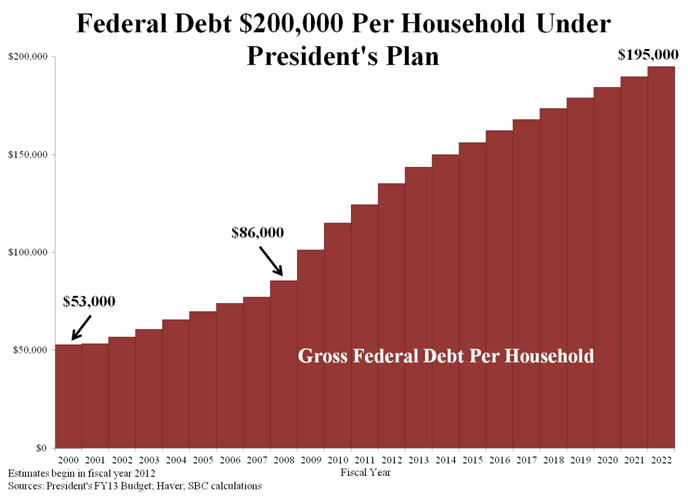
PowerLine has a couple of graphs that tell the story in President Obama’s own words.  Of course, he wants to raise corporate taxes in part to cover this shortfall, even though raising taxes, beyond a level long since surpassed, reduces tax revenue collected as businesses (and individuals, in response to parallel attempts to raise taxes on them) do what comes naturally for all of us: look for ways to hang onto what’s ours, rather than give it up to a ravenous government.

The graphs are clear in their own right; I’ll say no more here.

Remember this in November.