Another Government Has Shut Down

…at least partially, and again over Democrats’ intransigence with fiscal responsibility. Tom Corfman, of Crain’s Chicago Business:

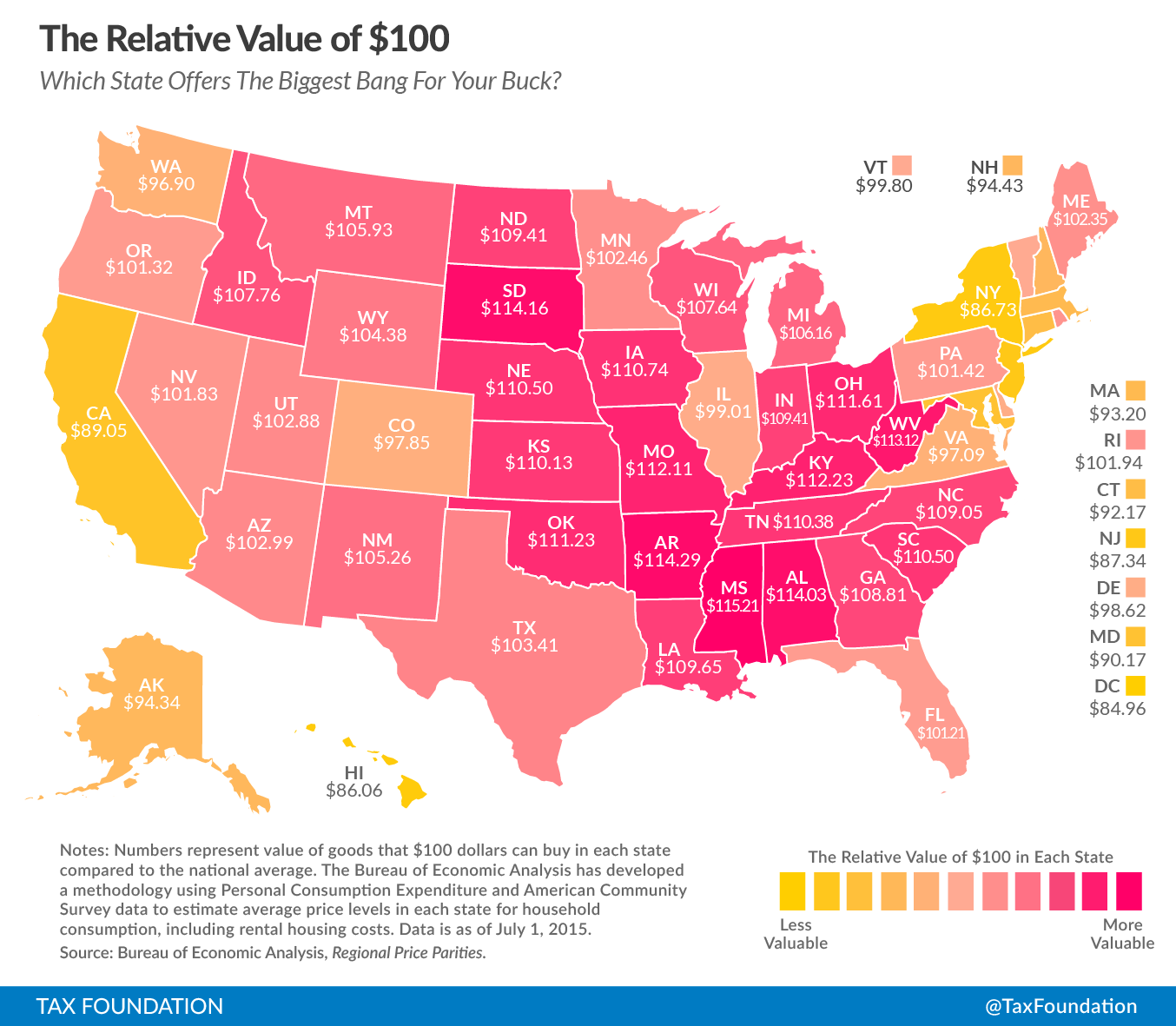
The financial situation in Illinois has been dire for a number of year. What brings it to a head is the election of Governor Bruce Rauner, a Republican with a strong agenda to change the state. At the same time, he faces opposition from the Democratic legislature and their constituents.

Indeed. Rauner won’t agree to any tax increases unless the Democrats agree to making the state more friendly to business: which means reducing Illinois’ regulatory environment, reducing spending (including on the Teachers Union’s schools), and reducing taxes generally, especially on businesses.

But those Democrats have to have their spending. Never mind that the state has the nation’s lowest credit rating, the nation’s most underfunded state pension system, and the nation’s largest deficit at the state level.

It’s only money.

Progressive Tax Credits

Targeting youth unemployment, Hillary Rodham Clinton plans to propose tax credits to encourage businesses to train young people and offer apprenticeships to develop lifelong job skills.

Clinton’s campaign said she would outline a proposed tax credit of $1,500 for every apprentice that a business hires….

Here’s a thought. How about lowering taxes altogether and getting the tax code out of the business of social engineering? With suitably low taxes, you wouldn’t need to play games with taxes as inducements to do this or as discouragements from doing that.

With suitably low taxes and the code out of the business of social engineering, businesses could spend their energies on sound business planning rather than on shopping around for a tax deal.

With suitably low taxes and the code out of the business of encouraging this or discouraging that, there’d be less need for special interest groups or lobbyists to push for this or that Very Important Consideration in our tax code. (Yeah, yeah, I know.)

There’s this, too, in Clinton’s plan:

The campaign said the tax credit proposal would require accountability for employment and earnings outcomes for businesses receiving the credit. Apprentices would need to be registered in order to be eligible.

The Progressive gives, and the Progressive takes away.   The savings gained from her tax credit will be fully recouped in the costs of compliance. However, the government will grow, and more IRS bureaucrats will be hired, so it’s all good.

Note, too, that this doesn’t begin to address jobs availability in the ensuing robust, growing economy.

Business Investing

US businesses, feeling heat from activist investors, are slashing long-term spending and returning billions of dollars to shareholders, a fundamental shift in the way they are deploying capital.

Data show a broad array of companies have been plowing more cash into dividends and stock buybacks, while spending less on investments such as new factories and research and development.

As the trend picks up steam, so too has debate about whether activist investors—who take sizable stakes in companies, then agitate for changes they think will boost share prices—have caused companies to tilt too far toward short-term rewards.

Vipal Monga, David Benoit, and Theo Francis in their Wall Street Journal article at the link lay the bulk of this reallocation of business funds to activist investors demanding a prompt return on their, and other investors’, return. In truth, there’s a lot to this.

There’s another factor though, that plays at least as important a role: government regulation. Regulation compliance cost the US $1.86 trillion in 2013—11% of our GDP. That’s the general case; there also are regulations surrounding increasing—even improving existing—physical plant. The EPA’s new water “protection” rule, for instance, gives the EPA—the EPA!—a say in whether, and under what conditions, a new factory can be built.

And taxes. Despite lots of Congressional chit-chat, there remains on the books, for instance, the medical device tax of Obamacare, a tax that takes money off the top line revenue—revenue coming into a company before the first dime is spent on company-related things. A tax that’s already caused companies to cancel expansion plans or to move them overseas.

Regardless of the cause, though, whether activist, regulation, to taxes, this misallocation of funds can only have a negative effect in the mid- to long run, even though it’s a short-term good for investors like me. This sort of thing is bad for business’ competitiveness and bad in the aggregate for American global competitiveness and technological leadership.

Should our government do anything about this? Of course not, at least not directly. It is bad business to allocate all those funds to buybacks and dividends at the expense of expansion, upgrade, and innovation, but the real economy, the private economy where actual citizens and market participants live and work, will do a fine job of handling this. There’s no need for government to “get impatient” and step in, because the time lags between the stock market and the actual economy are so variable and unpredictable. Which lags make it positively counterproductive for government to interfere.

It would be good, though, if our government moved to reduce the cost of regulation. A good first step would be simply to rescind a random 10% of existing regulations, and then begin serious rescission from there. After that, the real economy will deal with the activists.

Overseas Cash Hordes

The [Financial Times] reports that just “five US companies are hoarding nearly half a trillion dollars as the country’s tax code and a tepid global economy deter businesses from spending their overseas cash piles. Apple, Microsoft, Google, Pfizer, and Cisco are sitting on $439bn of cash—accounting for more than a quarter of the total $1.73tn being held by US groups, according to Moody’s Investor Services.”

How to get this money back into the United States? Let’s see: lower the tax rate on foreign money being repatriated? Currently, we tax those funds at existing domestic tax rates; moving to a more territorial system where we tax only domestically earned income would lower the total rate some, giving some encouragement to repatriation of those overseas caches.

But wait. Who is best qualified to put that money to use? How about getting rid of the corporate tax structure altogether? Corporate customers pay the bulk of those taxes anyway in the form of higher prices. Then, with the vast bulk of those half-trillion dollars coming back and staying in the private economy because government isn’t taking a chunk as taxes leaves the money in the hands of the best decision makers: the companies earning the money, and the employees earning their cut with their labor.

Now there’s a half-trillion dollar shot in the economic arm for the US.

EU, Taxes, and Competition

European Union regulators delayed decisions on whether four multinational companies including Apple Inc and Amazon.com Inc may have benefited from illegal tax sweeteners, citing difficulties in obtaining information to make their case.

The difficulty isn’t just from the companies: the nations involved also are reluctant to give up the data.

There’s this, too:

At a time of austerity in many countries, governments across the continent are seeking to shore up their finances and demonstrate to taxpayers that wealthy multinationals are paying their fair share of tax.

And

Brussels cannot impose tax policy on the bloc’s 28 governments, but regulators are using an EU-wide ban on selective state aid to companies to crack down on individual tax deals that they deem to have given an unfair advantage to certain enterprises.

And

The aim of the investigations, Ms [EU’s European Commissioner for Competition Margrethe] Vestager added, is to set a precedent that would “inspire” national governments to change legislation to ensure their tax systems are in line with EU rules. That has already happened in Ireland, where the government has announced it would phase out the controversial double-Irish tax loophole, she said.

Of course, all of this would go by the boards if the EU and its member nations could understand their governments don’t need the money; they need to reduce their government spending. The money in the nations’ citizens’ hands would be far more efficiently used—and provide the competition Vestager’s office claims to want.

Even accepting the fiction that each nation’s tax code should look like every other nation’s tax code, because all the nations are carbon copies of each other.  After all, suppressing competition among the nations is a core task of Vestager’s office.