
Sharia Law and Impeachment

Andrew McCarthy, writing for National Review Online last Friday, described a shocking—and revolting—development in American jurisprudence.

Before I go into that, though, let me digress and provide a couple of quotes from the Pennsylvania Constitution.  First is a state judge’s oath of office, from Article VI, Section 3:

I do solemnly swear (or affirm) that I will support, obey and defend the Constitution of the United States and the Constitution of this Commonwealth and that I will discharge the duties of my office with fidelity.

Next is the state constitution’s view of free speech, from Article I, Section 7 (I won’t go into the Federal Constitution’s 1st Amendment statement on free speech—a statement which a Pennsylvania state judge also is sworn to support, obey and defend):

The free communication of thoughts and opinions is one of the invaluable rights of man, and every citizen may freely speak, write and print on any subject, being responsible for the abuse of that liberty.

Now to cases.  It seems that Ernest Perce was the victim of a criminal assault.

Ernest Perce wore a “Zombie Mohammed” costume and pretended to walk among the dead (in the company of an associate who was the “Zombie Pope….”  The assailant, Talag Elbayomy, a Muslim immigrant, physically attacked Perce, attempted to pull his sign off, and, according to police, admitted what he had done right after the incident.

State Judge Mark Martin

dressed the victim down for failing to appreciate how sensitive Muslims — including the judge himself [a converted Muslim] — are about Islam.

The (now twice over) victim recorded the audio of Martin’s shameful performance and has posted it on YouTube.

Here is an excerpt from Martin’s…ruling (there’s more at the NRO link above).

Before you start mocking someone else’s religion you may want to find out a little bit more about it. That makes you look like a doofus.

And Mr. Thomas [Elbayomi’s defense lawyer] is correct. In many other Muslim speaking countries – excuse me, in many Arabic speaking countries – call it “Muslim” – something like this is definitely against the law there. In their society, in fact, it could be punishable by death, and it frequently is, in their society.

Thus, what goes on in “other countries” must, of necessity, supersede domestic law governing behaviors done domestically.  Even when what goes on in those countries is patently barbaric.

Courtesy of The Volokh Conspiracy, Martin explains himself:

This story certainly has legs. As you might imagine, the public is only getting the version of the story put out by the “victim” (the atheist). Many, many gross misrepresentations. Among them: I’m a Muslim, and that’s why I dismissed the harassment charge (Fact: if anyone cares, I’m actually Lutheran, and have been for at least 41 years).

I also supposedly called him and threatened to throw him in jail if he released the tapes he had made in the courtroom without my knowledge/permission (Fact: HE called ME and told me that he was ready to “go public” with the tapes and was wondering what the consequences would be; I advised him again to not disseminate the recording, and that I would consider contempt charges; he then replied that he was “willing to go to jail for (his) 1st amendment rights”- I never even uttered the word “jail” in that conversation).

He said that I kept a copy of the Quran on the bench (fact: I keep a Bible on the bench, but out of respect to people with faiths other than Christianity, I DO have a Quran on the bookcase BESIDE my bench, and am trying to acquire a Torah, Book of Mormon, Book of Confucius and any other artifacts which those with a faith might respect).

He claims that I’m biased towards Islam, apparently because he thinks I’m Muslim. In fact, those of you who know me, know that I’m an Army reservist with 27 years of service towards our country (and still serving). I’ve done one tour in Afghanistan, and two tours in Iraq, and am scheduled to return to Afghanistan for a year this summer. During my first tour in Iraq, I was ambushed once, attacked by a mob once, sniped at once, and rocketed, bombed, and mortared so many times that I honestly don’t know how many time I’ve been attacked. Presumably by Muslim insurgents. My point: if anyone SHOULD be biased towards Muslims, one would think it would be me. I’m not, however, because I personally know or have met many good, decent people who follow Islam, and I shouldn’t characterize the actions of those who tried to kill me as characterizations of all Muslims.

When I asked him why he dressed up as “Muhammad zombie,” he told me that it was because he was reflecting the Muslim belief that Muhammad rose from the dead, walked as a zombie, and then went to heaven. That was one of the reasons I tried to spend 6 whole minutes trying to explain and de-mystify Islam through my own knowledge, and in an attempt to prevent an incident like this recurring in my community. Unfortunately, the message was obviously not received in the vein that I had intended. And, in the interest of full disclosure, I did use the word “doofus,” but didn’t call him that directly; I said something akin to “ if you’re going to mock another religion or culture, you should check your facts, first- otherwise, you’ll look like a doofus.”;

In short, I based my decision on the fact that the Commonwealth failed to prove to me beyond a reasonable doubt that the charge was just; I didn’t doubt that an incident occurred, but I was basically presented only with the victim’s version, the defendant’s version, and a very intact Styrofoam sign that the victim was wearing and claimed that the defendant had used to choke him. There so many inconsistencies, that there was no way that I was going to find the defendant guilty.

A lesson learned here: there’s a very good reason for Rule 112 of Rules of Criminal Procedure- if someone makes an unauthorized recording in a Court not of Record, there’s no way to control how it might be manipulated later, and then passed off as the truth. We’ve received dozens upon dozens of phone calls, faxes, and e-mails. There are literally hundreds of not-so-nice posts all over the internet on at least 4 sites that have carried this story, mainly because I’ve been painted as a Muslim judge who didn’t recuse himself, and who’s trying to introduce Sharia law into Mechanicsburg.

Like Professor Volokh suggests, this is unconvincing.  There remains the fact of the assault, both unprovoked and unjustified.  As to “the victim’s version, the defendant’s version, and a very intact Styrofoam sign,” there’s also the police’s hearing of the assailant’s confession and the possibility of an explanation of the sign’s condition, both of which he refused to hear when he tossed the case.

This judge has willfully and deliberately applied foreign law (and he as, as a separate matter, applied foreign religious law) to a domestic American criminal case, and he has done so by replacing applicable domestic law with that foreign law.  This is a deliberate violation of his oath of office, and this should be an impeachable offense.  We’ll see in the coming days whether the Pennsylvania legislature is up to the task of protecting American, and its own state, law.  We’ll also see in the coming days whether the prosecutor involved is up to the task of appealing this willfully wrongful dismissal.
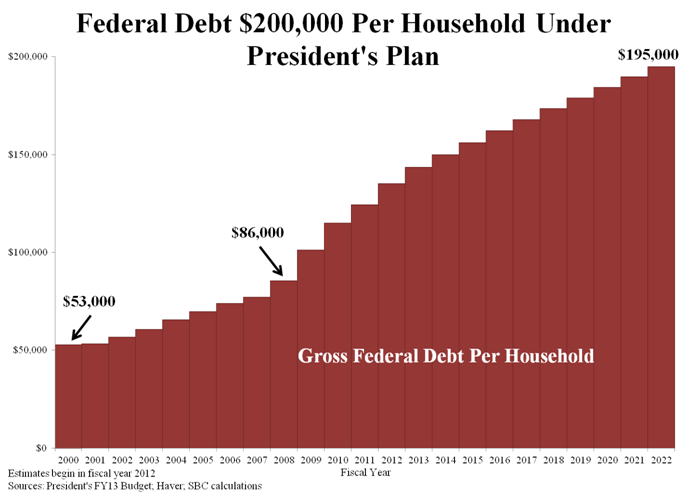
Debt, Spending, and Taxes Revisited

PowerLine has a couple of graphs that tell the story in President Obama’s own words.  Of course, he wants to raise corporate taxes in part to cover this shortfall, even though raising taxes, beyond a level long since surpassed, reduces tax revenue collected as businesses (and individuals, in response to parallel attempts to raise taxes on them) do what comes naturally for all of us: look for ways to hang onto what’s ours, rather than give it up to a ravenous government.

The graphs are clear in their own right; I’ll say no more here.

Remember this in November.

Another 2nd Amendment Question

But it’s (ostensibly) for a good cause: Illinois State Representative Kelly Cassidy (D, Chicago) wants to tax the sale of ammunition and use the proceeds to help defray the costs of “high-crime area” trauma centers that treat the results of violent crime.

Illinois Campaign to Prevent Gun Violence Campaign Director, Mark Walsh, actually argues with a straight face

[The money would go] into communities here in Illinois that have been damaged with gun violence.  I think it’s a legitimate way to pursue funding.

This is, at best, naïve.

Illinois State Rifle Association Director, Richard Pearson, makes things clear:

[Criminals are] not buying their ammunition (legally). They’re not paying any part of the tax. They’re getting their stuff illegally[.]

Taxing the law-abiding to pay for the criminals’ actions doesn’t address the problem—that violent crime.  If Illinois wants to lower the costs of violent crime outcomes, the answer is straightforward: reduce the incidence of violent crime.  This begins with enforcing crime laws, even in those “high-crime areas,” not waiting until the violence has been done, and then looking for ways to cover the price.

It’s unacceptable to expect law-abiding citizens to subsidize the outcomes of enforcement failure.  State Congresswoman Cassidy knows this full well—her move is nothing more than another attempt to restrict our firearm possession and ownership and use rights.

Do We Really Need This Sort of Thing?

The Federal Housing Finance Agency, according to The Wall Street Journal, is looking at the development of a system that could replace both Fannie Mae and Freddie Mac, whose continued financial existence is an open question.

Given the lack of coherence in Congressional or Executive support for reform in this arena (beyond agreeing that “something” ought to be done “real soon now”), the FHFA wants to maintain flexibility in its own views of how deeply the government should support the $10.3 trillion mortgage market.

One of the things the FHFA is considering is combining the several forms of mortgage-backed securities (all those MBS, CMOs, etc. of not-so-long-ago fame) that Fannie Mae and Freddie Mac write into a single, standardized (mortgage-backed) security that each would issue.  The idea is that with this single instrument issued by both, it would be easier to eliminate both FMs in favor of a single agency.  Simplification is a step in the right direction, but this seems just a variation on a theme, and not real reform—it would retain the concept of a government agency in the mortgage business.

Another option under consideration is the transfer of mortgage portfolio responsibility to a third-party investment firm, but FHFA says that doing this would likely be more expensive and come at higher risks for the regulator.   But this perpetuates the myth that a government regulator should be involved at all.

In the meantime, in the administration’s usual vague manner, Treasury Secretary Timothy Geithner “pledged to lay out more detail on the administration’s approaches to reforming the U.S. housing finance system this spring.”

Why not carry out real reform, and get government out of the housing market entirely, while freeing the lenders to lend according to actual risk assessments, with no favoritism forced for government-approved groups of borrowers?

Obama’s Tax Plan

Wednesday morning, Fox News predicted a wonderful new tax plan from the administration:

…long-awaited corporate tax reform plan on Wednesday, lowering the top income-tax rate for corporations to 28 percent from 35 percent while eliminating deductions.

Corporations with overseas operations would also face a minimum tax on their foreign earnings, new tax benefits would be given to incentivize U.S. manufacturers while taxes on oil and gas companies would reportedly see their taxes go up while losing many large deductions and subsidies.

Now we can see what President Obama actually is proposing.  Although he offers to lower the top corporate rate from 35% to 28%—and that’s the headline—the proposal represents a net tax increase.

Moreover, he wants to make permanent his tax credits and other subsidies for his favored “green” energy products; although in a cynical offering to conservatives, the proposed Obamatax also contains the Santorum manufacturer’s tax subsidy.  Obama never seems to understand that if a product, company, or industry can’t compete on a level playing ground—in an actual free market—that product, company, or industry isn’t ready for market at all.

Along these lines of special treatments according to whether Obama approves or disapproves of an industry, the Obamatax would eliminate oil and gas tax preferences (while maintaining those “green” subsidies).  This, though, will drive up gasoline prices and home (and business) heating costs—and those manufacturers’ energy costs—to the detriment of our struggling economy and of the Americans trying to get by in it.  Despite this, the subsidies should, indeed, be gotten rid of, but the “green” subsidies should be eliminated, too.  With a truly level playing field, the effects will spike and ripple quickly, and costs ultimately will stabilize at lower levels from the overall simplification and the lack of “green” costs being absorbed by the oil and gas—and all other—industries and energy consumers.

The Obamatax applies a tax to business’ overseas profits, a first in American history—and a dramatic increase in the taxes owed by American businesses.  The administration justifies this with claims like:

If foreign earnings of U.S. multinational corporations are not taxed at all, these firms would have even greater incentives to locate operations abroad or use accounting mechanisms to shift profits out of the United States[.]

On the other hand, Intel, just to take one example, earns 85% of its revenue from its overseas computer chip and other manufacturing facilities—facilities that are devastatingly expensive to build or operate here.  Now Intel’s overseas profits will be taxed.  Since Intel makes its money overseas, though, why would it want to remain a US-headquartered corporation under the Obamatax regime?

There’s also the small matter of who gets this tax “cut.”  It isn’t the sole proprietorships, partnerships, Subchapter S, and so on firms whose profits are passed on to the business’ owners, who then pay ordinary income taxes on that passed through income.  Obama’s own IRS data indicate that over half of American business income is earned by these “noncorporate” companies.  But that needn’t concern an administration bent on raising taxes any way it can get away with.

True to form (this form is not unique to the present administration), the Obamatax dictates to businesses what their policies and paradigms must be.  It intends to eliminate “last in first out” accounting, disallow the use of life-insurance policies as a tax shelter, tax carried interest as ordinary income, and eliminate depreciation for corporate aircraft (this last is chump change, but it’s an important bone for the President’s base).  Even more intrusively, though, the Obamatax interferes with debt financing decisions by reducing the deductibility of interest on business’ borrowings.

There’s the underlying mindset, too.  The Obamatax justifies the “minimum tax on foreign earnings” by saying it would

discourage a global race to the bottom in tax rates.

as if low taxes, or having the lowest taxes globally, is somehow bad.  As if it’s really the government’s money, and they’ll magnanimously let our companies have what government deems appropriate.

In touting this tax change (it’s hardly a reform), Secretary Geithner said that the overhaul should be fiscally responsible (the Obama definition of “responsible,” of course) and,

A key test of any reform should be whether the net impact of the changes improves the incentives for investing in the United States.

If he really meant that, why is this the proposal?  Answer: he really does believe it; the proposal’s structure simply displays, again, the administration’s breathtaking lack of understanding of economics.

Obama is masquerading this as a tax cut, but it’s plainly another of his tax increases, and it’s commensurately hard on our already weakened economy.  It’s a good idea to lower the tax rate, and it’s a good idea to eliminate (though reductions are a good start) tax credits, loopholes, subsidies, and the like.  But these must be across the board—no company or industry should be getting special government treatment, good or bad.