Some large businesses are claiming that, rather than being good for job growth, the tax reform plan currently on offer in outline form would be good for investors.
As if these are mutually exclusive outcomes.
The chief executive of Honeywell International, Darius Adamczyk, said tax reform will “offer greater flexibility for Honeywell,” adding that the industrial conglomerate would invest more cash in the United States to pay for dividends, mergers and acquisitions, share buybacks and paying down debt.
Amgen CEO Robert Bradway said on Wednesday any tax reform would be incorporated into its capital allocation plans, noting the drugmaker expects to continue to raise its dividend and buy back shares.
However (there’s almost always a however).
Greater flexibility is always a good thing for business, especially in contrast to government fetters telling a business (or pressuring one through, say, a tax code) what its investments ought to be, what its products ought to do, how it ought to produce its goods and services.
Investing more cash in dividends is good for the stereotypical widows and orphans—folks who live on fixed income sources and who have been hammered by the last eight or more years of government-suppressed interest rates. Dividends also are a way of attracting investors—which is cash for the business.
M&A are a way (not the only way) businesses can grow, increase efficiency, achieve greater economy through greater scale. Which adds up to lower prices for consumers and greater demand for the product. Achieving functional monopoly (or oligopoly—monopoly by a few) power and abusing it? There’s a law for that.
Share buybacks? Those are a wash, with no economic effect good or bad—for the company or anyone else.
Paying down debt? That’s always good. It gets a monkey of too much debt off the business’ back, reducing its cost of money when it needs to borrow again. Or pay existing dividends. Or otherwise increase the business’ flexibility.
All of which is good for job growth, even in if it might not increase hiring on the instant of, say, a significant corporate tax reduction. Good for investors means good for businesses. Increased flexibility means good for business. Increased efficiency, lowered price to consumers, increased consumer demand means good for business. And that means the business grows and hires.
And, yes, there will be relatively prompt increases in hiring, also. That’s more of that flexibility: businesses won’t put all of their eggs in one basket, if they’re (allowed by government to be) flexible. They won’t be any more likely to put all of their tax cut into dividends or share buybacks than they would be to use it all for hiring. And I haven’t even mentioned committing some of that tax cut to increased R&D, which produces more and better products, which increases demand for output, which facilitates growth—which leads to increased hiring.
But, but….
The situation could be a replay of the massive 2004 repatriation “holiday” under President George W Bush, in which 843 US-based multinationals brought back $362 billion in overseas profits at a deeply slashed tax rate of 5.25%.
Most of that money went to stock buybacks and dividend increases.
This is a non sequitur. The tax reform on offer isn’t a holiday, a one-time event. What’s on offer is permanent, so actual long-term planning will be able to be done, and the funds more efficiently allocated for the long game.
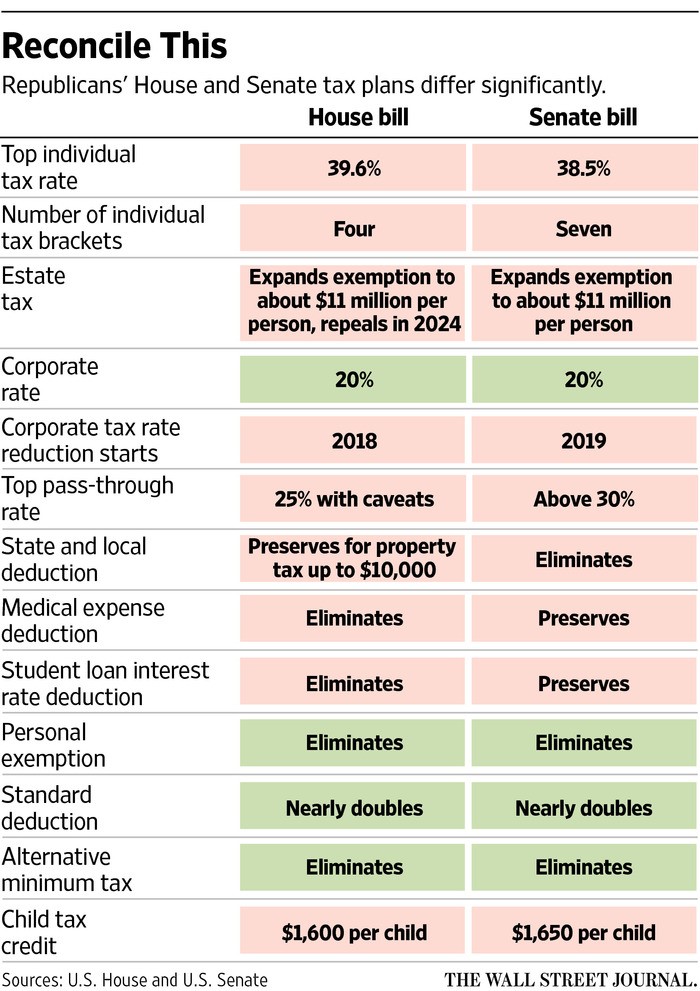
The Reuters piece at the link didn’t discuss the other major aspect of the proposed tax reform, the tax rate cuts and general reform from the individual taxpayer perspective. Those rate cuts and reforms represent more money in the hands of taxpayers. That means more stuff getting bought and more money being saved and more money being invested by those individual taxpayers (often referred to as retail investors, because the vast majority of us are not institutional or professional investors).
Greater demand by individuals means more production by business. More money being saved means more money in the banks’ hands to lend to businesses and individuals—which means business expansion, more houses being bought, and on and on. More investment by us retail investors means more money in business hands to fuel R&D, production, expansion.
And all of that means a growing economy and increased jobs.
“Good for investors” and job growth, far from being mutually exclusive, are mutually supportive.