It’s Only a Few

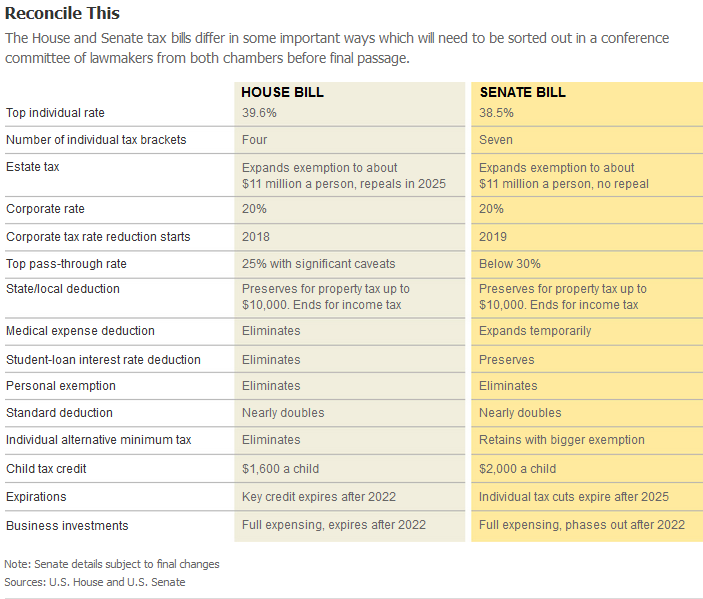
It’s only a few Americans that we don’t like—the despicable 1% (actually the 0.2%).  That’s the Progressive-Democratic Party’s excuse for insisting that the death tax be kept in place in the current tax code reform effort.

The estate tax affects a very small—and very wealthy—number of Americans.

Only the estates of about 2 out of every 1,000 Americans who die face this tax right now.

Besides, repealing the tax, the Progressive-Democrats claim, would

unfairly provide more benefits to the wealthy over low- and middle-income Americans.

No, the real unfairness, in the minds of these persons, is that it would provide any benefits to the wealthy.  Never mind that the wealthy pay the largest share taxes, especially when compared to income earned.  A couple of CBO statistics, coarser than just the hated 1%, compiled in 2013 from 2010 data:

Quintile Share of Income, % Share of Taxes Paid, %
Top 57.9 69.3
Bottom Two, Combined 9.7 2.8

Notice, too, quite apart from that, the Progressive-Democrats’ fundamental philosophy: those not rich are not in a position to take the same tax-avoidance steps as the rich, so the rich must be denied those steps; they must be held back.  The right of each man to show the best that there is in him must be denied the successful because others cannot or do not keep up.  Can’t possibly reform the tax code so that it applies equally to all income levels.  So much for equal opportunity, according to the Progressive-Democrats.

Never mind, also, that the estate tax is a fundamentally unfair tax that taxes wealth, much of which has been taxed already in the earning.

Never mind, too, that the identity politics-centered claim is false: the death tax affects the minimally wealthy and the small businessman and small farmer whose businesses and farms reach above the threshold in asset value but that don’t have free cash, and so the businesses and farms must be sold to raise the taxman’s vig—impoverishing the heirs.

No, this is just another excuse to hammer those hated wealthy, and who cares about the collateral damage.

A State Runs a Budget Deficit

Louisiana, run by Progressive-Democrats since Bobby Jindall was term-limited out of office, is facing a $1.5 billion deficit as “temporary” tax increases implemented earlier begin to expire.  Jay Dardenne, the center-left Republican Commissioner of Administration, Louisiana governor John Bel Edwards’ chief budget officer, says that “devastating” spending cuts would be necessary absent a renewal of the tax increases or enactment of other tax increases.

Devastating: among those are additional reductions in higher education. This is misleading from a State official whose State already objects to school choice and to successful voucher schools in the K-12 range—because they take money away from badly failing public schools.  Except they don’t.  The State funds the public schools on a per-student basis, but when a student leaves for a voucher school, he takes less than his full allotment of funds with him, leaving the “losing” public school fiscally net better off.

It’s misleading, too, because higher education has an inflated tuition and fee structure supported by all that government funding (the Feds are contributors to this inflation with their own money transfers to the higher ed institutions), leaving those students fiscally net worse off.

Other areas facing spending reductions are tear-jerker “child-welfare” programs and “other” state agencies.  Never mind that these facilities waste the funds allocated with their high bureaucratic overhead and middle-man frictions.  And in the case of welfare (not just child), through uncertain enforcement.

No, the only ones truly facing serious spending reductions are the lobbyists and the Progressive-Democrats’ (and too many Republicans’) cronies.

It’s past time for a $1.5 billion reduction in State spending.  Louisiana needs to leave the money in the citizens’ hands, and it needs to stop competing with the private sector in providing goods and services and in acquiring resources for its own (unnecessary) functioning.

Law Be Damned

The city of Seattle passed a law earlier this year that levied an income tax on the city’s wealthiest—all in the name of equality of outcome and so…fairness.

It turns out that tax was contrary to the State’s law, which said that only the State can levy an income tax and, explicitly, cities cannot.  The question also was raised regarding whether the Seattle law was even contrary to the State’s constitution—illegitimate—as well as illegal, but the judge avoided the constitutional question.

King County Superior Court Judge John Ruhl ruled in a Wednesday that Seattle did not have the authority to impose the tax because state law prohibits tax on net income.

Seattle’s City Attorney Pete Holmes and Mayor Tim Burgess demurred.

We are also living in a time of extreme income inequality that corrodes our social compact and causes many to wonder whether wealthy individuals are paying their fair share[.]

Because their goal is worthy, so the law should be disregarded.  And

Councilmember Kshama Sawant told Fox News in July that the need for the tax is “crystal clear.”

Again, goals, but let’s skip the inconvenience of law or of adjusting particular ones.

It just doesn’t matter what the law requires.  Never mind, either, that the State’s voters have repeatedly defeated such a tax on State referendums.  The Left demand to do what they want, when they want it, because that’s all that’s…just.

As an aside, it should be noted that Holmes and Burgess, in demanding the rich pay their fair share, carefully decline to say explicitly what level of wealth constitutes “the wealthy,” although the level is implied by the erstwhile tax’s threshold, and they carefully decline to say what that “fair share” would be: what per centage of the city’s taxes should be paid by “the wealthy,” especially in comparison with what the “fair share” of the city’s taxes paid by the various levels of the non-wealthy would be.

Soros Puts His Money in a Tax Shelter

And Stephen Moore’s knickers are in a twist.

Congress is still scrambling to find ways to pay for its tax cut, so perhaps it should pay closer attention to last month’s news that George Soros had transferred $18 billion of his fortune to a private charity that he controls. There it will be sheltered from the Internal Revenue Service forever. This may be the single biggest tax dodge in US history, yet no one on the right or left seems to have raised an eyebrow.

How is it a tax dodge, exactly, to take legal steps to protect one’s assets from the taxman?  Why would anyone “on the right” object to a man moving to hang on to more of his money?

I don’t question these billionaires’ right to do with their money as they wish. I’m simply arguing that Congress shouldn’t let the rich and politically powerful use private foundations to escape taxation.

This is disingenuous. Private foundations are a completely legal way in which to shelter funds and to escape taxation.  I applaud Soros’ effort to keep his money, even as I decry his politics.  Had I billions of dollars—or even thousands—I’d try to protect it from the Revenooers, too.  Government doesn’t need as much of my money as it tries to claim; as long as it’s legal, there’s nothing wrong with keeping out of the Feds’ paws.

What Congress should be doing is finding ways to allow those of us with less money than Soros, or even less than the 20% or 30% or 50%, shelter more of our money, too.  One way to do that would be via a single low, flat income tax rate applied to all income regardless of source by a tax code devoid of carve-outs, deductions, credits, froo-froo.  Failing that, the tax reform plan on offer from the House and possibly (subject to the whims of three or four Republican Senators’ egos) on offer from the Senate would be a good start.

Missing the Point

In a Letter to the Editor last Thursday, one letter writer had this to say about a Wall Street Journal op-ed, The Great Progressive Tax Escape:

[T]he problem of interstate tax competition, like the continuing bids to draw Amazon to pick a favorable second headquarters, isn’t strictly speaking a problem of high progressive taxes, as your editorial asserts. Better to view it the other way, as a problem of low-tax jurisdictions using these devices to compete in a way that erodes the tax bases of other states. That is exactly what is happening globally as well, when Ireland, Panama, Malta, etc. make rock-bottom offers to global companies to do business there. Developed states and countries cannot run governments at the discounted prices offered by these tax havens….

And yet these States and countries—developed all—do run their governments at “discounted” prices.  The resulting economic activity is how they can afford these additional “discounts.”

The plain fact is high-tax governments do not need the tax rates they have—as demonstrated by the fact that the “winning” States already have low rates and high enough revenue to pay for what those governments have been hired to do.  And they do so despite the plethora of special interest give-backs that so heavily populate even these States’ tax codes.  The high-tax States and the high-tax countries would do well to learn from these examples, and instead of whining about losing an entirely fair competition, reformed their tax codes.  Ireland—and Luxembourg, which the letter writer omitted to mention—have some of the lowest tax rates in the world, and their people are prospering.

A related and equally plain fact is that with low, flat tax rates there’d be no need to compete on who can offer the biggest tax breaks.  Such breaks have considerably less value coming on a base rate of, say, 10%, than they have at usurious rates like 35%.  Further, the base rates, applicable to all and already low, would allow businesses to locate themselves on the basis of sound business and not at all on who’s offering the most goodies.