Déjà Vu All Over Again Cont’d

In this post I continue a discussion of the advice to Reagan memo that The Wall Street Journal excerpted a few days ago.

On the matter of budgeting, the memo advised, in the context of fighting then-high inflation

Many question whether you are serious about a sizeable cut in budget outlays.  Credible FY 1981 and 1982 budgets which do that clearly and unambiguously would evoke an extraordinary response in the financial markets, and set the stage for a successful assault on inflation and a decline in mortgage and other interest rates.

This is sound advice for the next President, also.  Credible FY2013 (since the Progressives in the Senate and White House have variously refused to offer a serious budget or any budget at all for the last three years, a 2013 budget for the fiscal year then in progress will remain a necessity), FY2014, and FY2015 budgets will be as critical in demonstrating resolve in cutting irresponsible spending as it was in fighting inflation.  And it will be critical in reducing the impact of the inflation time bomb the Fed is creating, should that go off before it can be defused.

Those advisors continued in their section on the Budget:

Off-budget financing and government guarantees mount and expand programs through the use of the government’s borrowing capacity, draining the nation’s resources without being adequately recorded in the formal spending totals.

Pop quiz time: what off-budget financing and government guarantees are present today?  Bonus question: what does the continued existence of off-budget financing and government guarantees of any sort say about the sense of responsibility felt by incumbents of a Big Government?

The Reagan advisors also warn of this:

In addition, the mandating of private expenditures for government purposes has gained momentum as the spotlight has [i]lluminated direct spending. These mandates are also a clear call by government on the nation’s resources.

Boy, has it ever gained momentum.

Closely related to budgeting is tax policy.

Tax policy is properly the province of your Secretary of the Treasury.

Indeed.  And the inability of the present Treasury Secretary to pay his own taxes says far more about the unnecessary scope and complexity of current tax law than it does about his intelligence or sense of responsibility.  If we assume Geithner isn’t a tax scofflaw—and I believe he is a fundamentally honest man—his mistake should be a clarion call for simplification.  That it is not speaks poorly of the incumbents on both sides of the aisle.

Reagan’s advisors continue:

We consider that the key ingredients should be your proposals for the Kemp-Roth cut in personal income tax rates, simplification and liberalization of business depreciation and a cut in effective taxes on capital gains….  Consistent with your proposals earlier this year, the effective date for these reductions should be January 1, 1981.

Other key proposals are…reductions in…inheritance taxes and the taxation of Americans living abroad….

Again, these are remarkably prescient.  The Obama tax increase is set to take effect on January 1, 2013.  That increase, aside from raising income taxes on ordinary Americans smack in the middle of the present recession, will include jumps to usurious rates on what those same ordinary Americans would otherwise leave to their own children and other heirs of their choice—not of government’s choice.  Moreover, most sub-Federal jurisdictions only tax income earned within their jurisdiction.  Why should the Federal government be any different?

The Obama tax increase also includes major increases in business-related taxes: investment taxes on capital gains and increasing the double taxation present on dividend payouts.  These will serve only to reduce investment in American businesses, to the detriment of our already suffering economy.

I’ll have more in the coming days.

Déjà Vu All Over Again

This post is taken from “Economic Strategy for the Reagan Administration,” a memo summarizing studies commissioned by candidate Ronald Reagan and delivered to President-elect Reagan on mid-November 1980, as summarized in The Wall Street Journal.  The memo began

Sharp change in present economic policy is an absolute necessity.  The problems of inflation and slow growth, of falling standards of living and declining productivity, of high government spending but an inadequate flow of funds for defense, of an almost endless litany of economic ills, large and small, are severe, they are not intractable.  Having been produced by government policy, they can be redressed by a change in policy.

Aside from the high inflation of 1980, that could have been written today.  Besides, the actual inflation then is a threatened inflation today, with the Fed’s policy of deliberately depressed interest rates and rapid printing of money coupled with the administration’s prolific spending.

You have identified in the campaign the key issues and lines of policy necessary to restore hope and confidence in a better economic future:

  • Reestablish stability in the purchasing power of the dollar.
  • Achieve a widely-shared prosperity through real growth in jobs, investment, and productivity.
  • Devote the resources needed for a strong defense, and accomplish the goal of releasing the creative forces of entrepreneurship, management, and labor by:
  • Restraining government spending.
  • Reducing the burden of taxation and regulation.
  • Conducting monetary policy in a steady manner, directed toward eliminating inflation.

This amounts to emphasis on fundamentals for the full four years, as the key to a flourishing economy.

Sound like what’s needed today?

The need for a long-term point of view is essential to allow for the time, the coherence, and the predictability so necessary for success. This long-term view is as important for day-to-day problem solving as for the making of large policy decisions.

This was true then, 50 years after the start of the New Deal, a 50-year period of spendthrift policies and high taxes, and it’s even truer today, 30 years farther down that road, with this administration’s effort to raise taxes on top of its already explosive spending and debt accumulation.  It’ll take a long time, and a long-term strategy is critical, to repair the damage.

The memo went on with sound advice concerning budgeting, tax policy, regulation, energy, and monetary policy—it could have been written for delivery to President-elect Mitt Romney in mid-November 2012.  And we can certainly hope both for President-elect Mitt Romney, and that he takes this advice to heart.  The incumbent certainly has already eschewed it.

I’ll more on the Reagan memo in the coming days.

The Long and Short of Fiscal Policy

Sorry, I couldn’t resist.  That’s the title of another missive by Alan Blinder in a recent Wall Street Journal issue.

He begins with this Keynesian fiction:

In the short run—let’s say within a year or so—a larger deficit…boosts economic growth by increasing aggregate demand.  It’s pretty simple.  If the government spends more money without raising anyone’s taxes to pay the bills, that adds to total demand directly.

Umm, well, no, it doesn’t.  That increased government spending (accepting, arguendo, no associated increase in taxes) only comes at the expense of future taxes or current borrowing—which is more future taxes.  People aren’t as dumb as Keynes thought they were, or as Blinder thinks they are.  In the present case, Americans see this trap, and they reduce spending (and investing) today in favor of saving and/or paying down their own current debt, thus offsetting that spike (again assuming, arguendo, that a government actually can reduce spending after its spike up).

Moreover, that government spending crowds out a significant fraction of remaining private spending.  After all, why should we buy something that the government is going to buy and give to us?

On top of this, Swedish economists Andreas Bergh and Magnus Henrekson have a 2011 piece (login required; sorry), that surely Blinder has read, in the Journal of Economic Surveys that shows the deleterious effects of increases in government spending.  They conclude that a 10% increase in government size (relative to GDP) is associated with a 0.5%-1.0% lower annual growth rate in the economy.  This is no spike, but then governments don’t spike spending.

It really is pretty simple.  Just not as oversimplified as Blinder suggests, and not in the same direction.

In short, money that folks, and businesses, are paying in higher taxes is money that folks, and businesses, no longer have available for current spending.  Or investing, or saving.

It is true, though, that spending is increased relative to taxes.  But the only result of this “increase” is in the deleterious effects of deficit spending.

On this matter, Romer and Romer have a 2010 piece (login required here, too; sorry), that surely Blinder also has read, in American Economic Review, that shows the powerful effect of increasing tax rates on economic growth: an increase in taxes of 1% of GDP lowers GDP by nearly 3%.

Blinder has more in his piece, but with his underlying assumptions shown to be false, the rest has no more value than that.  For instance, he writes in all seriousness

But don’t we need to reduce the deficit—and by large amounts? Yes, we do, but that’s in the long run, where the effects of larger deficits are mostly harmful to economic growth.

Of course, as Blinder’s own Keynes noted so long ago, in the long run, we’re all dead.  More empirically, over the long run, governments do not unroll spending increases that they’ve foisted off on us for that good cause of the time.  As long as Blinder is satisfied that our present enormous debt can be safely reduced in that far-off fantastical long run, he’s satisfied that our present enormous debt never will be reduced.

Update: Deleted a section where I’d simply–and carelessly–misread Blinder’s statement, and so my argument became irrelevant.

Forms of Subsidy

I’ve disparaged the concept of federal government subsidies in other writings, so I thought I’d take a post and identify some types of government subsidy to illustrate the range of handouts for which our pocketbooks are impressed.  Most of the forms below are Federal subsidies; although I do mention a few state-level subsidies, also.

One form of subsidy is direct money transfers.  These can take the forms of block grants to states, and they usually come with federal strings attached governing the use of the money, or the amount of money the states must put up in order to get the grant, or the state laws that must be enacted (vis., speed limits) in order for all of the grant to be delivered.

These transfers also often are based on the services being offered, as is the case with Federal Medicaid transfers, which depend on how many state citizens are eligible under the state’s rules.

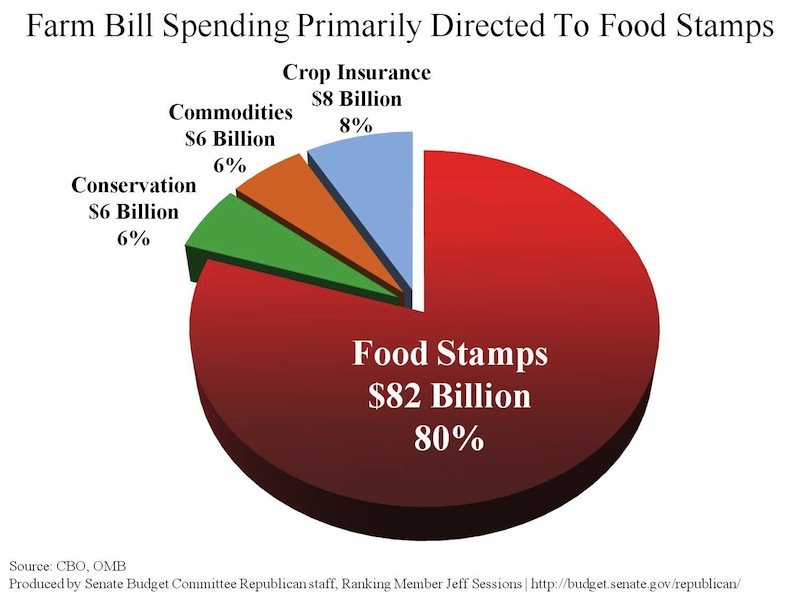
Another direct transfer is unemployment insurance and food stamps.  In these programs, recipients have only to apply for the subsidy, and they begin receiving either money ( unemployment checks, for instance) or vouchers (food stamps are an example).

Another form of subsidy is preferential tax treatment for the favored group.  These can take the form of tax deductions or credits or exemptions from taxes.

Examples of tax credits include the Earned Income Tax Credit, tax credits to consumers for installing energy efficient items (e.g., geothermal heat pumps, residential-sized wind turbines, solar energy systems, and so on).  Other tax credits are aimed at the ethanol industry and renewable energy equipment manufacturers.

Tax deductions are available for oil and gas producers and for renewable energy producers and equipment manufacturers.  Other deductions exist for home (or business plant) mortgage interest, charitable contributions, age and disability on personal income taxes, and so on.

Individuals whose income is below a threshold are subsidized through being exempt from income taxes altogether.  The interest on some government borrowing (municipal bonds, for instance) can be exempt from taxes, and certain non-profit organizations are exempt from a variety of taxes.

Another form of subsidy is in the form of government loan guaranties, which enable the borrower to get loans at more favorable rates than they otherwise could.  These include, among others, student loan guarantees, home mortgage guarantees, and renewable energy company loan guarantees (recall Solyndra, et al.)

Another form of subsidy occurs through regulation.  A major example here is the protected monopoly status that utility companies and drug manufacturers get.  Such status protects the company from competitive pressures for a period of time (drug manufacturers and, not too distantly related, patent, copyright, license, and so on, holders) or for so long as government objectives are met (e.g., utility companies, who must comply with their (state) government rate requirements and criteria).

Other regulations are aimed explicitly at putting certain entities out of business.  The EPA’s clean air regulations aimed at coal-fired power plants are an example.

Another form of subsidy occurs through government mandates.  An example of these are mandates to buy (or sell) certain products (which can occur only at the expense of not having that money available to buy other products, even unrelated ones; or at the expense of not having that capital equipment or staff available to produce/sell other products, including unrelated ones).  The Patient Protection and Affordable Care Act’s Individual Mandate and the requirement to provide contraceptive services and abortifacients are illustrations.

Another type of mandate is a manufacturing one: producers must use fixed per centages of ethanol in gasoline manufactured for sale.  This mandate exists solely to create a market for ethanol that otherwise might not exist.

Another form of subsidy consists of government preferences.  These include preferential hiring requirements (military veterans, minorities, disabled, and so on) and preferential contract award requirements.  Preferential contracting includes preferences for minority-owned small businesses, and for small businesses, generally.

Another form of subsidy occurs primarily at the state level, particularly in those states that have union shop laws.  Such laws subsidize the unions either by requiring individuals to join a union as a condition of employment or by allowing the union to collect union dues from all employees in a company whether the employees are union members or not.  Such laws represent a large source of income for the unions in the form of dues they wouldn’t otherwise be able to collect.

Perhaps the most insidious subsidy is in the form of government-mandated affirmative action programs.  Such programs require the government to give greater weight to some citizens in its hiring (which weight can only come at the expense of other citizens trying to compete for the same job) and to give greater weight in its contracts to some entities—which again can come only at the expense of other entities bidding on the same contract.  Note that while these are closely related to the government preferences noted above, they differ in a critical way: affirmative action is based solely on race, gender, or ethnicity.

This is not an exhaustive list, either of type of subsidy or examples within each type presented, by any means, but you get the idea.  Nor have I offered any judgment concerning the legitimacy of any of the subsidies; that’s for another post.

“Tin Cups,” Is It?

An AP article certainly makes one attitude plain.

In a piece otherwise about US efforts to get other nations to help pay for the costs of developing, training, and equipping an indigenous Afghan army, the AP’s anonymous writer says,

U.S. officials have had their tin cups out for months.  Marc Grossman, the top State Department official for Afghanistan, recently hit up European nations….

While there is an element of begging in the manner of President Obama’s entreaties to other nations that they honor their obligations; it’s hardly a matter of tin cup-holding to insist that those nations do, in fact, honor their obligations.

The writer also notes that

…someone has to pay for that army in an era of austerity budgets and defense cutbacks.

It’s true enough that times are tough for everyone.  They’re tough not only for the nations that have to be begged to honor their commitments, though; they’re also tough for the women and children—and men—of Afghanistan, and they’ll be especially so after the US, NATO, and other participating nations leave.

It’s also true enough, moreover, that these straits, while not the result of the original purpose of the US’ invasion of Afghanistan, have become obligations due to the mission creep in our involvement.

A lesson here, aside from the unseemly need to press NATO and others in the present involvement to satisfy their obligations—which shame is on those who must be pressed—is to not allow such coarse mission creep the next time.  And there will be a next time, since the terrorists don’t agree that the war is over, or there will be a new Dark Age descended.