Democracy

A thought on its underpinnings, from Peter Wilson at the end of his The Heart of Europe: A History of the Holy Roman Empire:

Democratic legitimacy derives from the openness of debate, not the practice of voting.

He’s not far wrong, as comparisons between nations like Russia on the one hand and the United States or Great Britain on the other illustrate.

Too Much Privacy?

That’s actually a serious question.

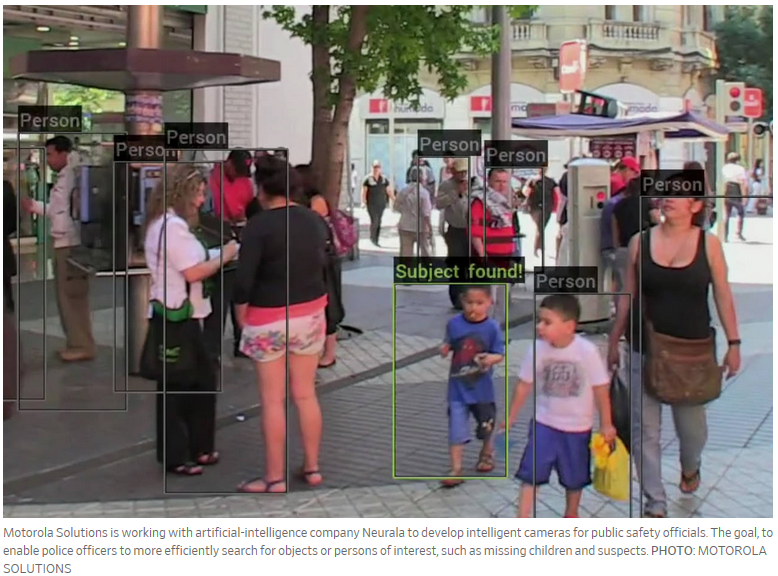
The firestorm over Facebook Inc’s handling of personal data raises a question for those pondering a regulatory response: is there such a thing as too much privacy?

And

Law-enforcement agencies rely on access to user data as an important tool for tracking criminals or preventing terrorist attacks. As such, they have long argued additional regulation may be harmful to national security.

Unfortunately, no government can be trusted with citizens’ privacy, as the Star Chamber secret FISA court, the FBI leadership (and not just the current or immediately prior crowd—recall J Edgar Hoover), prior DoJ leadership, the Robert Mueller “investigation,” and much more demonstrate.

If our government wants to learn things, it needs to get back into the HUMINT business rather than relying so much on hacking IT systems.  And get an honest warrant, not just a FISA one.

Suboptimal

A Maryland gerrymandering case, this one brought by the Republican Party, after it lost an election in the newly gerrymandered district, was before the Supreme Court this week.

One of the plaintiffs’ arguments is that the redistricting “violated Republican voters’ free-expression and political-association rights.”

Justice Sam Alito had the correct response to that bit of nonsense:

[I]f understand it, I really don’t see how any legislature will ever be able to redistrict[]

If the Republicans don’t have anything more than whining about losing an election, how can their legitimate gerrymandering complaints be taken seriously?

School Shootings and Gun Control

At a Parkland high school, a thug went in and killed 17 while injuring several more; he was captured elsewhere and after several hours.  At a Maryland school, a thug went in, wounded two, and was killed.

There are some critical differences in the two situations.

The Parkland thug had a semi-automatic rifle, while the Maryland thug had a hand gun.

The Parkland thug obtained his rifle legally, if with some trouble (one potential seller refused the sale, having developed his own suspicions while interacting with the thug).  The Maryland thug obtained his pistol illegally.

At Parkland, the armed responder was a cop, stationed outside the school (I’m eliding his failure to enter).  At the Maryland school, the armed responder was inside the school.

There are a couple of lessons here.  One is that gun control laws didn’t keep the Maryland thug from getting his illegal weapon.  The other is that possessing guns while inside the target and being trained in their use shortened the shooting incident and yielded far fewer casualties and far less lethality.

Those lessons are universal.  They apply in schools, in supermarkets and other public gathering places, and around in the home.

There is a role for gun control.  Training in the use of guns is critical.  Practice so the defender can fire accurately is critical.  That’s critical gun control.