Two Economies

We are at a cross-roads in our country and it’s time to force the issue.  We face a generational decision on the kind of economy we want for ourselves—and so the degree of individual freedom we want for ourselves.  We made a choice in the 2010 elections, and it’s time to confirm or repudiate that choice this fall and in the election cycles to come.

There are two basic types of economies available to us: wealth redistribution by government fiat or wealth redistribution by individual choice in a free market.  In this post, I’ll write a little about each type.

Wealth redistribution by government fiat:

When redistribution occurs by fiat, it occurs by taking wealth from some and giving it to others.  I won’t go into the class warfare that this sort of thing can engender, regardless of good intentions.  I’ll write, instead about the outcomes of such redistributions.

This taking of wealth from some necessarily caps the wealth of that some.  Indeed, reducing income inequality often is the explicit goal of this sort of wealth redistribution as that transferred wealth represents “income” to the recipients.

Reducing income inequality, though, ignores a fundamental aspect of human endeavor: we are not endowed with the same degree of talent, of work ethic, of luck.  We do not even have the same desires for what we want out of life.  Thus, income inequality is an inevitable outcome of the application of men to their own efforts and goals.  Capping this—which wealth redistribution necessarily does—in the name of “fairness,” then, prevents those with greater talent or ethic, or even luck, from enjoying to the fullest the fruits of their labors.  By this, it denies those men the equality of opportunity promised them by our social compact.

Worse, this prevents those men even from achieving their fullest potential, because knowing they will have some portion of the results of their efforts taken from them, there is no incentive to excel, to do their best.  Their reach will no longer exceed their grasp.

At least as bad, this also saps the morality of those men: they lose both the incentive and a portion of the means to satisfy their obligation to their fellows.  Government has taken this obligation and the responsibility for its satisfaction away from them and arrogated these to itself.

But what of the recipients of the redistribution: are they not enough better off (the other major purpose of government-forced redistribution) to offset the loss to the successful?  No.  In fact, they’re not any better off at all; they’re worse off.

At this end of the spectrum, incentive to do better is lost: they’ll receive a measure of wealth regardless of their effort.  They lose their sense of obligation to do their best and thereby to not be (or to be as much less of as they can) a burden on the duty (or wealth) of others.  Government as arrogated this responsibility to itself.

These men, also, are denied their promised equal opportunity; they are denied their chance to show the best that is in them—morally as well as economically.

Wealth redistribution by free market individual choice:

The case concerning this is quite straightforward.  First, the answer to an obvious question: how is this redistribution, at all?  The rich get richer, with the seller collecting his price for his good or service, and the poor get poorer for having had to pay those prices.  Actually, not.  That description looks, too narrowly, only at the pecuniary aspect of an exchange of money for a good or service; there is, though, a much broader picture.

Economically, it’s simple.  The desire for those goods and services is demand that stimulates production.  That increased production represents both increased hiring and lower prices.  Those lower prices and higher employment increase demand.  Which generates jobs….  Obviously this won’t go on forever; there will reach a point where the price of labor, which has been increasing as its supply becomes scarcer, makes it uneconomical to continue hiring and producing.  However, that level of full employment is a far higher level of employment than that which obtains in an economy where the wealth passed on to people is as relatively independent of effort as it is in an economy driven by government-forced redistribution.

Thus, wealth is redistributed as a result of the free—voluntary—exchange that exists in a free market.  Those exchanges ultimately create additional jobs, which is increased wealth for all participants.

This voluntary wealth redistribution is short and direct on a personal level, also: rather tautologically, both parties to a (voluntary) transaction are made wealthier by that transaction: each party has obtained something of value to him that he didn’t have before.  After all, if it wasn’t of value, neither party would have been interested in the exchange.  And by completing that exchange, each party now has that thing.

All participants in a régime of free market redistribution are enriched morally, also.  It is in this environment that equality of opportunity is preserved.  It is in this environment that everyone, rich and poor, is able to work to his fullest potential.  It is in this environment that everyone is able to enjoy all of the fruits of his labor.  It is in this environment that everyone retains his moral obligations, the ability to satisfy them (including the obligation of each to help his less fortunate fellows), and by doing so improving themselves.

These men, then, are guaranteed their promised equal opportunity; they are guaranteed their chance to show the best that is in them—morally as well as economically.

Forms of Subsidy

I’ve disparaged the concept of federal government subsidies in other writings, so I thought I’d take a post and identify some types of government subsidy to illustrate the range of handouts for which our pocketbooks are impressed.  Most of the forms below are Federal subsidies; although I do mention a few state-level subsidies, also.

One form of subsidy is direct money transfers.  These can take the forms of block grants to states, and they usually come with federal strings attached governing the use of the money, or the amount of money the states must put up in order to get the grant, or the state laws that must be enacted (vis., speed limits) in order for all of the grant to be delivered.

These transfers also often are based on the services being offered, as is the case with Federal Medicaid transfers, which depend on how many state citizens are eligible under the state’s rules.

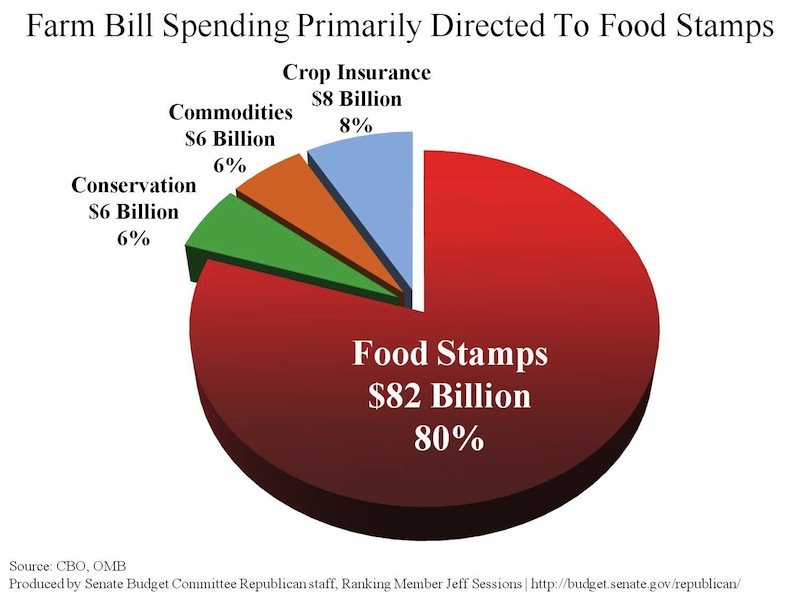
Another direct transfer is unemployment insurance and food stamps.  In these programs, recipients have only to apply for the subsidy, and they begin receiving either money ( unemployment checks, for instance) or vouchers (food stamps are an example).

Another form of subsidy is preferential tax treatment for the favored group.  These can take the form of tax deductions or credits or exemptions from taxes.

Examples of tax credits include the Earned Income Tax Credit, tax credits to consumers for installing energy efficient items (e.g., geothermal heat pumps, residential-sized wind turbines, solar energy systems, and so on).  Other tax credits are aimed at the ethanol industry and renewable energy equipment manufacturers.

Tax deductions are available for oil and gas producers and for renewable energy producers and equipment manufacturers.  Other deductions exist for home (or business plant) mortgage interest, charitable contributions, age and disability on personal income taxes, and so on.

Individuals whose income is below a threshold are subsidized through being exempt from income taxes altogether.  The interest on some government borrowing (municipal bonds, for instance) can be exempt from taxes, and certain non-profit organizations are exempt from a variety of taxes.

Another form of subsidy is in the form of government loan guaranties, which enable the borrower to get loans at more favorable rates than they otherwise could.  These include, among others, student loan guarantees, home mortgage guarantees, and renewable energy company loan guarantees (recall Solyndra, et al.)

Another form of subsidy occurs through regulation.  A major example here is the protected monopoly status that utility companies and drug manufacturers get.  Such status protects the company from competitive pressures for a period of time (drug manufacturers and, not too distantly related, patent, copyright, license, and so on, holders) or for so long as government objectives are met (e.g., utility companies, who must comply with their (state) government rate requirements and criteria).

Other regulations are aimed explicitly at putting certain entities out of business.  The EPA’s clean air regulations aimed at coal-fired power plants are an example.

Another form of subsidy occurs through government mandates.  An example of these are mandates to buy (or sell) certain products (which can occur only at the expense of not having that money available to buy other products, even unrelated ones; or at the expense of not having that capital equipment or staff available to produce/sell other products, including unrelated ones).  The Patient Protection and Affordable Care Act’s Individual Mandate and the requirement to provide contraceptive services and abortifacients are illustrations.

Another type of mandate is a manufacturing one: producers must use fixed per centages of ethanol in gasoline manufactured for sale.  This mandate exists solely to create a market for ethanol that otherwise might not exist.

Another form of subsidy consists of government preferences.  These include preferential hiring requirements (military veterans, minorities, disabled, and so on) and preferential contract award requirements.  Preferential contracting includes preferences for minority-owned small businesses, and for small businesses, generally.

Another form of subsidy occurs primarily at the state level, particularly in those states that have union shop laws.  Such laws subsidize the unions either by requiring individuals to join a union as a condition of employment or by allowing the union to collect union dues from all employees in a company whether the employees are union members or not.  Such laws represent a large source of income for the unions in the form of dues they wouldn’t otherwise be able to collect.

Perhaps the most insidious subsidy is in the form of government-mandated affirmative action programs.  Such programs require the government to give greater weight to some citizens in its hiring (which weight can only come at the expense of other citizens trying to compete for the same job) and to give greater weight in its contracts to some entities—which again can come only at the expense of other entities bidding on the same contract.  Note that while these are closely related to the government preferences noted above, they differ in a critical way: affirmative action is based solely on race, gender, or ethnicity.

This is not an exhaustive list, either of type of subsidy or examples within each type presented, by any means, but you get the idea.  Nor have I offered any judgment concerning the legitimacy of any of the subsidies; that’s for another post.

YGTBSM

The answer, it seems, to a poor showing on a test is to lower the test’s passing threshold, and not to lower the teachers who did such a poor job of teaching.  How does this help our children learn?  How does this help our society raise children into capable adults who can help our nation compete in the world?

I do not understand how a fourth-grader comes to be ignorant about camels.  Don’t we teach our children anything, anymore, about the Middle East—a region that has a role in civilization’s beginnings, a role in the evolution of Western civilization, and a very significant role in today’s events?

The matter comes up because only 27% of Florida’s fourth-graders scored a four or better (four is passing), on a one to six scale, on this year’s Florida Department of Education fourth-grader standardized writing exam.

The test question (which, in an idiotic example of today’s substitution of jargon evolution for actual teaching development, is called a “prompt”) at the center of the failure rate  was this:

Suppose you or someone else had a chance to ride a camel.  Imagine what happens on this camel ride.  Write a story about what happens on this camel ride.

How hard is that?

Ann Egitto, a Longwood, FL, Rock Lake Middle School language arts teacher (they taught English in my middle school, and French and Spanish.  “Language Arts” teaches all of these together?  Painting with words?  Is this more cutesy naming in place of actual teaching?), says this about the question [I’m assuming the grammar error is Ms Bisram’s transcription error and not Ms Egitto’s]:

It was just a very poor prompt, when do we see camels in Central Florida….  I couldn’t even write about the camel prompt and I’ve been writing for 40 plus years[.]

Really?  You don’t feel constrained to teach the children entrusted to you for an actual education something about the wider world beyond Central Florida?  Say, Jacksonville, or the Everglades, or Alabama or Georgia?  Perhaps Europe, or Asia?  Maybe the Middle East?

Does this say more about the question’s difficulty, or about teaching skills—and initiative?  And by extension, since I hardly believe she’s unique in this regard, about Florida’s union teachers generally?

Lisa Wright, an Idyllwilde Elementary School teacher, added [again, I’m assuming the grammar error is Ms Bisram’s transcription error]:

A lot fourth graders in my school probably don’t even know what a camel really is[.]

Whose fault is that, Madam?

Ms Egitto continued [sigh]:

I’m teaching my kids about punctuation and grammar every day and the state is just failing us miserably.

Yeah.  It’s somebody else’s fault.  That’s my story, and I’m sticking to it.

Never mind that the Florida DoE says that the question was extensively reviewed and well-received by about 1,500 students who were selected to take it during a field-testing period.

The point is not whether a fourth-grader is able to write about Middle Eastern transportation.  The point is what we are (not) teaching our children that they’re unable to pick up this sort of useful detail (including, perhaps, sheep, or Mediterranean Grass, or…) in the course of teaching our children about the Middle East.  Or, again I ask, are we not teaching the Middle East?  teaching nothing about Capt Thomas Edward Lawrence helping the Arabs attempt to throw off Turkish, German, and English yokes during WWI (oh, by the way, they used camels on their way across the desert to attack the Germans at Aqaba…).

Some Government Health Mandate Fallout

President Obama  insists, in response to religious organizations’ concerns, that the costs of birth control coverage can simply be shifted to insurance companies for those organizations with religious objections. This, though, simply demonstrates Obama’s cynicism.  The costs are far more than those of mere money.  The costs are moral, and shifting pecuniary costs to others (itself an egregious immorality) has no impact on this.

Some organizations recognize this moral cynicism and are demonstrating the courage of their convictions.  Vice President of Advancement at Franciscan University in Steubensville, OH, Mike Hernon told Fox News

We couldn’t believe the price (increase).  We had [their insurance company] go back and reconfirm it.  They said it was dictated by coverage limits that were released by the Obama administration.

The university had been excluding contraceptive services and related medications from its health insurance programs for its students.  The price increase that so shocked Hernon was a tripling: from $600 per year per student to $1200 for the fall semester and to $1800 the following year.  A large part of this increase was driven by the Patient Protection and Affordable Care Act’s mandate that the coverage available be increased to $100,000 for the students—for coverages that students don’t need.

As a result of the cost and of the moral violation the PPACA mandates demand, Franciscan University will be dropping its student health insurance coverage altogether.  This school cannot take part in a plan that

requires us to violate the consistent teachings of the Catholic Church on the sacredness of human life.

Hernon added that

This is putting people in a position where they are having to choose between their faith and their morality, and now an unjust cost.  These sorts of regulations from the government are forcing our hand in a way that’s really wrong. … At the end of the day, it’s the students who are hurt by this[.]

Franciscan University’s complete statement on the matter can be found here.

They’re not alone.  Ava Maria University, a private university in Florida is considering taking the same step for the same reasons.  University President James Towey says

My own sense is, I don’t see…how it makes sense for us to stay in this.

Towey noted that Ava Maria is looking at a cost increase of 65% – 85% from their current insurer.  He tried shopping the coverage, but other major insurers “wouldn’t even give us a quote.”

Do it my way, insists Obama.  Your moral objections don’t matter.  And never mind the cost, just pony up.  But this just demonstrates the failures: Obama not only is terrified of a free market in goods and services—dependency on government isn’t needed in such an economy.  But he’s also terrified of a free market in ideas.

Update: On Monday, Ave Maria University decided to go through with discontinuing its student health insurance plan.  University President James Towey said in a written statement

It is a sad day when Ave Maria’s students are forced to choose between enrolling in a health insurance plan that is both costly and offers morally objectionable benefits, and having no coverage at all.

Suicide by Spending

Alexis Tsipras, head of the Coalition of the Radical Left—SYRIZA—has announced that if he becomes the next Greek Prime Minister after the June elections, he will demand that Europe expand funding for Greek spending under a new set of agreements, or he will repudiate all Greek debt, in the expectation that such a repudiation will collapse Europe’s economies.  Europe, demands Tsipras, must move to a more “growth oriented” policy vis-à-vis Greece.  But his idea of growth is simply growth in government and growth in government spending.

Of course, this is naked extortion, and it should make it impossible for any further talks between the EU and Greece to occur—and for any further money to be sent to Greece.

There was a scene (NSFW) in Blazing Saddles that comes to mind from this SYRIZA extortion attempt.  The EU shouldn’t fall for it.