That’s the Point

Six months after it went into force, China’s tough new cybersecurity law is still troubling US technology executives who fear that it will put the intellectual property of their companies and the data they collect in jeopardy.

And

…while the law went into effect June 1, the Chinese government is still drafting specific implementation rules.

And

Company and trade-group representatives are also concerned that the network-equipment security reviews could expose proprietary source code, jeopardizing their trade secrets[.]

The People’s Republic of China wants other nations’ intellectual and technology property, and it’s willing to steal it in any way it can.  Especially targeted are businesses the PRC considers “critical information infrastructure:” computer-network operations in telecommunications, energy, transportation, information services, and finance.

Notice that.  These technologies also are critical to the other nations’ security. But that’s why the PRC demands the accesses and is so…hazy…about its rules facilitating getting those accesses.

One more reason to restrict the amount and nature of any business dealings with the mainland.

Naïve

It’s hard to believe that this level of naivete can exist in grown human beings, especially American journalists who hold themselves out as so smart and experienced.  But here it is.  Regarding northern Korea’s just-fired ICBM, the AP’s Foster Klug had this sort of thing:

Pyongyang may simply continue its torrid testing pace of its weapons, which, despite internal and global hype, are not yet a match for those of any of the established nuclear powers.

Testing is expensive, more so when the pace is torrid; the money is coming from somewhere.  But there are no worries about that in Klug’s mind.  As to the latter, it’s irrelevant.  The weapons don’t have to be a match for established nuclear powers’ systems.  Some of the warheads—nuclear or nuclear-triggered EMP—just have to get through.  Both Little Boy and Fat Man and their delivery systems would be no match for today’s established powers’ systems; each one still devastated a city.  And we’ve already seen what an accidental EMP burst did to Hawaiian cities.

And this:

Amid the speculation over what comes next, the North chose words Wednesday that suggested it was aiming to reassure, not to panic.

No, Baby Kim’s propagandists only chose words that would suck in timid or naïve journalists and “analysts” spring-loaded to see talking as the key to placating northern Korea.  Never mind that talk has been tried across a multiplicity of administrations in a multiplicity of nations, and yet here we are.  Never mind, too, that Baby Kim won’t be placated; he’ll just reach for more in response, as his father and grandfather did before him.

Paranoid?  I’ve never bitten into an apple and seen half a worm.  And today is not St Augustine’s day: we cannot absorb a nuclear first strike—especially a nuclear-triggered EMP, which needs no reentry capability—and strike back.  We won’t survive that first strike.

It would be the height of immorality to sit meekly by and run the risk that Baby Kim won’t launch.  It would be even more immoral to allow ourselves to be held hostage and our moves influenced, much less dictated, by a threat of nuclear strikes.  Especially when those deliverables are possessed by a tempestuously mad childlike Baby Kim.

We have to act on the threatening capability, not on the rhetoric.  And not on naïve assumptions about the good offices of our enemies.

Showcase Potential

Brussels is worried, and we should be, too, but for different reasons.  The People’s Republic of China is gaining influence in eastern Europe, and it’s doing it with one of my favorite tactics: international trade as a national policy tool.

In Hungary it is hailed as the “Eastward Opening.” Serbian authorities see it as the glue in a “reliable friendship”, while the Polish government describes it as a “tremendous opportunity.” Yet the 16+1, a grouping of 16 central and eastern European countries led by China, receives more caustic reviews in leading EU capitals, with diplomats fearing it could be exploited by Beijing to undermine union rules and take advantage of growing east-west tensions in the pact itself.

The catalyst for the group is China’s ability to finance and build the roads, railways, power stations and other infrastructure that some poorer central and eastern European countries need. But the scope of its operations has spilled over into overtly political and strategic areas, breeding mistrust among some of the western European powers that dominate the EU’s agenda.

The Financial Times piece at the first link is well worth the read, but the quoted paragraphs are the sum of it.

We should be worried, but not because Europe—the EU—is beginning to lose the contest for the hearts and minds of central and eastern Europe to the PRC, even as it’s beginning to lose the contest for the geography to an aggressively acquisitive Russia.   We should be worried because we’re not taking advantage of the opportunity the People’s Republic of China’s moves in eastern Europe presents us.   This is a contest we cannot lose, were we to enter it at all.

The way we should enter this contest is two-fold, and one of those folds also would serve to counter, and to roll back, the gains being made by that empire-seeking, domineering Russia.  One fold is to engage with eastern Europe—all of those 16, but not the +1—economically through international trade.  We should be busily pursuing free trade agreements with those 16—and contra President Donald Trump, we should be working toward a regional free trade agreement involving the 16 nations.  And Great Britain.  True enough, central Europe also is the heart of the EU, and that would complicate trade agreements, but that shouldn’t stop us from pursuing, separately and in parallel, such arrangements with the nations of eastern Europe.

There’s nothing like free market competition to increase the prosperity of the citizens involved, and so the nations involved, and from that, showcasing—again—both the fatal weaknesses of centrally planned economies in contrast with free markets, and the power of individual liberties and responsibilities for each citizen compared to the stultifying “security” of Big Government doing for the citizens, while firmly controlling what Big Government will allow those same citizens to do on their own.

The other fold is a mutual defense arrangement, much like NATO although separate from and in addition to it, with certain nations of eastern Europe.  As a first stage in setting this up, the treaty nations should include us, Great Britain, each of the Baltic States, Poland, Czech Republic, Slovakia, Hungary, and Romania.  This arrangement would profit from a second stage that would include Finland, Sweden, Norway, and Denmark.  In addition to the ties generated by trade, the mutual defense imperatives would both move toward a strong barrier to Russian expansionism, and it would spur economic development as a happy side effect—to both the nations’ benefit and further to resist PRC inroads.

The VA Still Fails

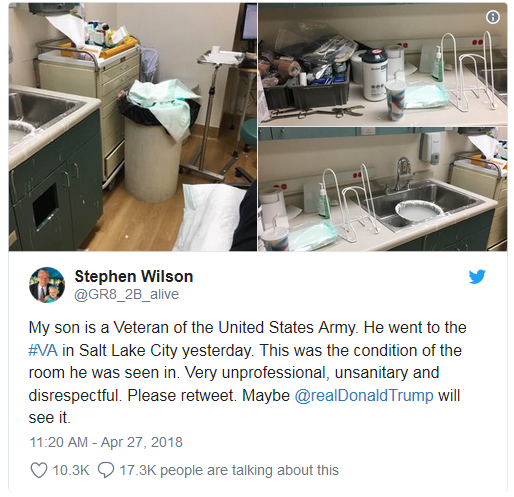
The Veterans Administration is still creating waitlists and secret waitlists, even after all this time of reporting on and calling the VA out for its dishonesty and its disservice to our veterans.  Now a Colorado VA facility is—still—doing secret waitlists.

Investigators with the VA Office of Inspector General confirmed whistleblower and former VA employee Brian Smother’s claim that staff kept unauthorized lists instead of using the department’s official wait list system.

That made it impossible to know if veterans who needed referrals for group therapy and other mental health care were getting timely assistance, according to the report. The internal investigation also criticized record-keeping in PTSD cases at the VA’s facility in Colorado Springs.

Senator Cory Gardener (R, CO):

It [the secret waitlists] highlights even more VA mismanagement and lack of accountability in Colorado. This cannot happen again, and it’s time for the VA to finally wake up and ensure our men and women are getting the best care possible.

No.  The VA is not going to clean itself up.  Outside agencies cannot clean this sewage pit.  The VA must be disbanded and its budget and nominal future budgets passed to our veterans as vouchers so they can get the medical help they deserve—and in too many cases, desperately need—from the doctors of their choice and the medical facilities of their choice.

Veteranos Administratio delende est.

Training

The Wall Street Journal is justifiably dismayed with the implications of the Navy report on the collisions of two of our combat ships with civilian ships in peacetime and in peaceful waters.  However, the op-ed’s Editorial Board give short shrift to the question of training for our sailors and officers.

…Congress needs to allocate enough money to adequately train sailors so they can fulfill their missions.

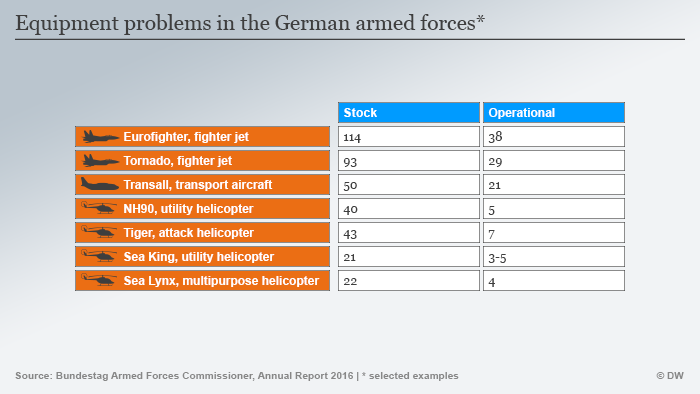
Funds for training—and equipage—certainly are important. But training, drills, scenario execution, all can be done daily on board each ship, they need to be done at least highly frequently, they need to drill the ship’s officer complement, and all of that is the responsibility of each ship’s commander and exec. If these two won’t do their duty, no amount of money for training, or equipage, will have value.