
America’s Debt

Deloitte & Touche, through their Deloitte University Press, have published a study called The untold story of America’s debt.  The pamphlet describes the dire straits in which we find ourselves through our exploding national debt; their high points from their opening summary are quoted below.

  • The debt crisis is likely bigger than you think: Current baseline projections make a host of optimistic assumptions [used by the CBO] that very well may not come to pass, that the Bush tax cuts will expire and the cuts to Medicare are allowed to go through. If any of these are reversed by Congress, the debt becomes much larger. Further, current debt levels are significantly higher when the government’s unfunded commitments, particularly around Medicare, are taken into account.
  • The magnitude of the debt is highly sensi­tive to economic fluctuations: America’s reliance on short-term debt makes it highly vulnerable to interest rate fluctuations. If rates return to historical levels, this would significantly increase interest payments on U.S. debt. If GDP fails to match expected growth levels it would further drive up the debt.
  • The debt could adversely impact American competitiveness: The U.S. is on track to spend at least $4.2 trillion in interest payments over the next decade, a significant amount of money that will be diverted from investments that could other­wise boost America’s competitiveness.
  • The rising debt could impact the inde­pendence of monetary policy: As interest payments on U.S. debt consume a growing share of the national budget, the pressure will increase for Congress and the executive branch to apply political pressure on the Federal Reserve in hopes of realizing pre­ferred fiscal policy outcomes.
  • The demand for and composition of America’s debt isn’t just America’s deci­sion: Foreign lenders own nearly half of publicly held U.S. debt. It is assumed that such debt holders have insatiable appetites for U.S treasuries. Should lenders stop buy­ing treasuries and invest their money else­where, this would force abrupt, and painful, changes in government spending.

They make a couple of additional points, also:

[I]f the Federal Reserve was forced to unexpectedly raise interest rates by 3 percent in 2016 (as occurred in 1981, 1994, and 2004), the total impact would shortly be in excess of $200 billion in additional costs to the U.S. treasury, or more than the annual costs of the wars in Iraq and Afghanistan combined at their peak in 2008.

Who among you out there in readerland think it unlikely, against the present backdrop of near-zero Fed interest rates, that the Fed won’t raise/be forced to raise rates to 3% (which still would be below our historic interest rate levels)?  I didn’t think so.

And they offer this table, concerning the sensitivity of our debt size to the underlying assumptions made by the CBO:

Category

Current CBO Target

Realistic Alternative

Increased 10- year deficits

Nominal Annual GDP Growth 4.7% 3.7% ~ $3T
10-Year Treasury Note Interest Rates 4.2% 5.8% ~ $2T
Continuation of Hard Cuts/Taxes Current law is enacted Current policy (extending Bush tax cuts, suspending Medicare cuts) continues unabated ~ $6T

Impacts of altering CBO assumptions

And this:

When the government runs large deficits, it competes for funds that could be invested in the private sector.  Higher costs for capital and limited access to investment will impact the borrowing costs of companies as well.   As Harvard Business School professors Richard H.K. Vietor and Matthew Weinziert write, “…If the cost of bor­rowing rises for the US government, it will rise for private-sector borrowers as well.

And a hint of the impact of interest payments on our fiscal capacity, from the Italian example:

[F]or every percent increase in the interest rate, 1.2 percent more of Italy’s GDP is diverted to paying interest on the national debt.

Notice that: GDP is diverted to service the debt rather than committed to productive activity.  And it’s diverted in greater amounts than the simple increase in debt.

Unfortunately, the present administration has shown itself wholly incapable of addressing this threat, as it has demonstrated throughout these last three years, and as President Obama demonstrated again in his hour-long reading last Thursday.

Deloitte & Touche’s full report can be found here.


h/t Power Line
Lending in Europe

I don’t often take issue with The Wall Street Journal, but a recent column by David Wessel cries out for a response.  His column is a description of the potential for an unraveling of the euro zone and of the euro itself, and of what needs to be done to preserve them both.

Wessel notes that [emphasis mine]

Today, banks in one euro-zone country are reluctant to lend to banks in another for fear that they won’t get repaid.  Bank lending among euro-area banks at the end of 2011 was 60% below the 2008 peak.  Money is moving not through usual bank-to-bank channels but only through the European Central Bank.  The urge…has given way to a rush to “ring-fence” assets and liabilities within individual countries.

He notes further that

Banks and investors are increasingly unwilling to buy bonds of governments other than their own.  Stronger northern European banks are reluctant to lend to customers and governments in southern and Eastern Europe.

You bet—see that bit about not expecting to be repaid.  Surely, it is no surprise that one enterprise declines to do business with another, or with a government, that the first views as unreliable.  Such a decision is entirely reasonable—it’s how sound businesses stay sound, for their own good, for the good of their employees, for the good of their larger community.

Wessel then quotes an example offered by Philipp Hildebrand, a former Swiss central banker, in an effort to show the unfairness of the situation:

Consider two similar companies, one Austrian and one Italian, that produce the same thing and sell to customers in Tirol in Austria.  The difference: the Italian firm, through no fault of its own, has to pay six percentage points more to borrow money.  “It kills whatever effort you make on structural reform,” [Hildebrand] said.

This is certainly too bad for the Italian firm and for the Italian government’s effort at reform, but where is the unfairness of the advantage to the Austrian firm?  The Italian firm operates under a government whose policies work against that firm’s ability to honor its obligations.  Further, how does this obligate in any way the German or Dutch or Finnish—or Austrian—taxpayer?

Beyond Europe’s new bailout of Spanish banks, there is talk of strengthening the authority of a pan-European banking supervisor…and creating a pan-European deposit-insurance fund so Italian depositors won’t move euros from Italian banks to safer German ones.

But this is insane.  In the first place, why shouldn’t Spanish depositors, or Italian depositors, or…—taxpayers all—move their money to safer locations?  Why should the taxpayers in those safer locations be on the hook for making other nations’ debtors, including those governments, whole?  There’s a very good reason some banks are safer than others, some economies sounder than others.  Some took—and take—better care of their fiscal responsibilities.

Banks are hunkering down at home.  National regulators are acting to protect their banks from the rest of Europe.  Governments are rebuilding old walls to protect taxpayers from bailing out others’ banks.

Why should they not?  By what remotest stretch of imagination should a sound bank be required to lend to an unsound bank—see the bit above about repayment expectations?  Why should taxpayers of one nation be required to throw their own hard-earned money into the bottomless pit of the profligate—see the bit above about repayment expectations?

And if this means the breakup of the euro zone and its currency, well, I’ve written about that elsewhere.

How “Green” Energy is Working out for Germany

We’re getting an empirical lesson in the effectiveness of an economy whose energy is intended to come entirely from “green” sources.  The Obama administration would do well to observe closely the in-progress German demonstration.

Germany’s electricity prices have risen 10% in the last few years, since the beginning of the German push to rely exclusively on these sources and to walk away from coal, which Germany has in abundance.  That might not seem like much of an increase, but it hurts.

The Federation of German Consumer Organizations estimates that roughly 10% of German households are having trouble paying for their energy.  Some have been pushed over the threshold and can no longer pay—and their electricity is being turned off altogether: nearly 200,000 recipients of Hartz IV, a German benefits program for long-term unemployed, had their power cut off in 2011 because of unpaid bills.  There’s more: the Economy Ministry has estimated that prices will increase an additional 3-5 euro cents per kilowatt hour in the next year, just to finance renewable energy subsidies and grid expansion.  Those increases amount to an additional €105-€175 ($130-$220) for a family of three.

There are more cost increases to come.  The Federal Network Agency, a wide-ranging regulatory agency with its fingers in electricity, gas, telecommunications, post and railway markets, will announce this fall that rates will increase by 30%-50% above current levels.  Consumer “contributions” to renewable energy subsidies will rise by more than FGCO’s estimate of 3-5 cents; the FNA says the rise will be closer to 4.7-5.3 euro cents per kilowatt hour—plus VAT, they remind us.  Hartz recipients, and potentially programs like Hartz, will be hard-pressed to meet these increases.

We don’t need these headaches in the US.

A Short History Lesson

Much ado has been made about the Great Depression and of the Panic of 2008, whose effects we’re still feeling.  Here is a brief history of another economic depression, one that could have had devastating impact, the depression that occurred in the US in 1920-1921.

In the 18 months between January 1920 and August 1921, our unemployment rate jumped to 14% or so from about 2%, as estimated from the times’ inexact records; wholesale prices fell more than 40%; and industrial production fell 23%.  From peak to trough, the total of checking accounts and currency fell by nearly 11%.  Some today might have considered the survival of the banking system as a whole to be in the wind.  The farm economy also was hard hit, and there were waves of business failures.  What interventions did the government effect to rescue the nation from this devastation?  The most effective intervention a government can execute with a free economy: it sat on its collective hands and let the economy right itself.

The Harding administration very deliberately ran a budgetary surplus. The Fed, with less than a decade’s worth of bad habits to influence it, raised interest rates, increasing the cost of money (and increasing the value of savings).   In response, the economy in 1922, the first full year of recovery, increased industrial production more than 27%, and by 1923, unemployment was back down to 3%.

What happened?  Market forces, unfettered by Know Betters in the government, happened.  The US and our goods and services were dirt cheap, and bargain-hunting investors from overseas jumped on the opportunity with both feet.  No central banker had to instruct investors in what to do with bargains.  Money flowed into the US, and this inflow delivered a powerful monetary stimulus.

Moreover, that 40% drop in prices meant that Americans’ dollars were able to buy more.  This increase in the value of our money—wonks call it the “real balances effect”—enabled Americans in our aggregate to begin again to buy goods and services.  Which stimulated demand for new production, which stimulated job creation.

And those banks that a Hank Paulson might have panicked over?  The biggest casualty was the little First National Bank of Cleburne, Texas, with its deposits of $2.8 million. That certainly hurt those Cleburne depositors, but the damage was that limited.  No bank was “too big to fail” in those days, and no big bank did.

That depression lasted all of 18 months, and over its course—one more little tidbit—the nation’s debt was reduced by nearly 6%, to a shade under $23 billion.  The Great Depression lasted 10-17 years (depending on who you read) and added billions to our debt—even before WWII, and the Panic of 2008 is still being felt four today, years later, and our national debt still is exploding by trillions of dollars per year.

Yet the Obama administration has cynically ignored the lessons the Harding administration could teach about not intervening in a free economy.  Rather, Obama and his “advisors” have chosen to listen to a fellow Progressive, Franklin Roosevelt, and so to ignore the manifest failures of government intervention into that more publicized depression.  Obama has chosen to double down on those failures with his own interventionist policies, which are exacerbating the Panic of 2008, and the ongoing recession still ensuing (never mind the “official” end of the recession in 2009—ask the millions of Americans who are out of work, and the millions more who have given up and abandoned the labor force altogether, how their recovery is going).

Worse (if that’s possible), the supposedly independent Federal Reserve System has been entirely complicit in these interventionist policies, what with its freely running dollar printing press, its QE2 (preceded by a QE1—why do these sound like failed luxury cruise liners?), its Twist, its artificially depressed interest rates (so much for the widows and orphans who need their savings for living), and so on.

Duplicity in Government

No, I’m not talking about leaking the nation’s secrets for personal political gain, or personally approving, individual by individual, the execution of…individuals…by remote control.  I’m talking about duplicity aimed at maintaining incumbents’ positions in government, and so their personal power.

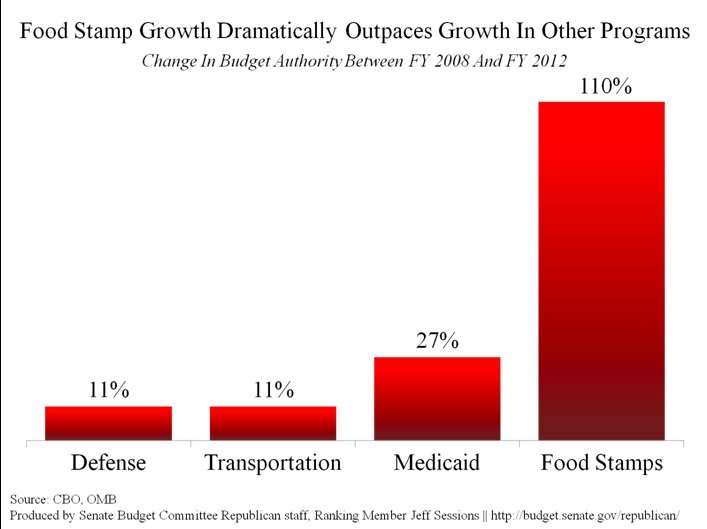
Here is an example of incumbents increasing the dependency of Americans on government. Here’s an example of falsifying “green” jobs data (as part of a larger investigation into the Labor Department’s “trouble” producing reliable labor data generally.  Select Part 2 from the tabs below the video and either listen to the whole thing, or skip ahead to 49:45 to hear the money part of the duplicity.

Here are a couple of examples that the government allows its unions to perpertrate on people:

  • Sally Coomer: Denied the Right to Choose by SEIU Leaders
  • Claire Waites: Denied the Right to Choose by Teachers Union Leaders