
A Death Penalty Revival

Former President Donald Trump (R) revived the use of the death penalty after a hiatus of some duration, and President Joe Biden (D) has moved to deprecate the death penalty anew, even if inconsistently so.

I confess to being conflicted regarding the death penalty. There are some crimes so heinous that they cry out for execution of the criminal. Rape, especially of children, and premeditated murder come to mind for me, along with mass and serial murder.

However, the error rate in getting convictions for these crimes is high enough to give me pause. Some errors are the result of police error in the investigation, police or prosecutorial misconduct in the runup to trial, prosecutorial or judicial error during trial, or prosecutorial misconduct during trial. These instances are very rare, but they happen. Another reason for my reluctance is improving technology. Increasing ability to analyze DNA data—even the basic ability to handle DNA as evidence at all—reveals what becomes erroneous trial and conviction today even when those convictions of yesterday were correctly obtained given the evidence then available.

Thus: it’s easy enough to execute a criminal tomorrow. But if he’s executed today, and tomorrow we learn that he was wrongly convicted, we can’t undo his execution.

It’s maddening, on the other hand, for the survivors of the criminal’s crime to suffer the delays defense attorneys and “liberal” Others throw up to obstruct and delay an execution, and those delays deny justice for those survivors.

One at least partial solution would be to streamline the death penalty appeals process. Require attorneys bringing a case for delay or sentence reduction to something less than execution to present all of their objections in a single case, to include consolidation of all of the several separate lawyer cases into a single, class-action if you will, case. Perhaps, allow a single additional appeal based on truly newly developed evidence.

That won’t address the errors later discerned with improving technology. However, we can’t allow heinous criminals to escape the death penalty on the basis of inherently speculative potential future technology advances.
India vs PRC

The Wall Street Journal has an interesting piece comparing the People’s Republic of China’s economic future with India’s. In the second paragraph (the semi-lede?), there’s this:

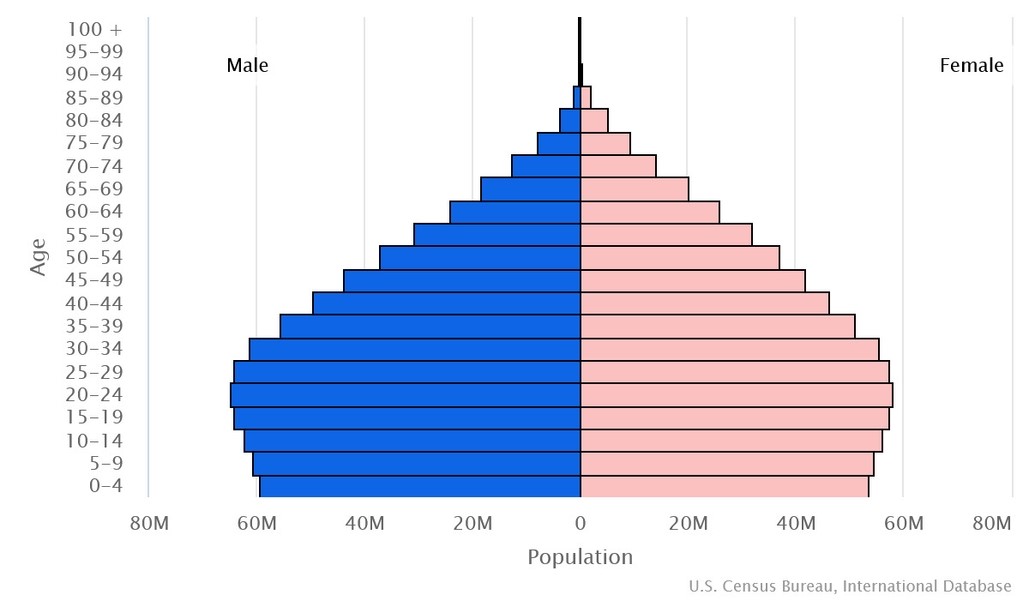
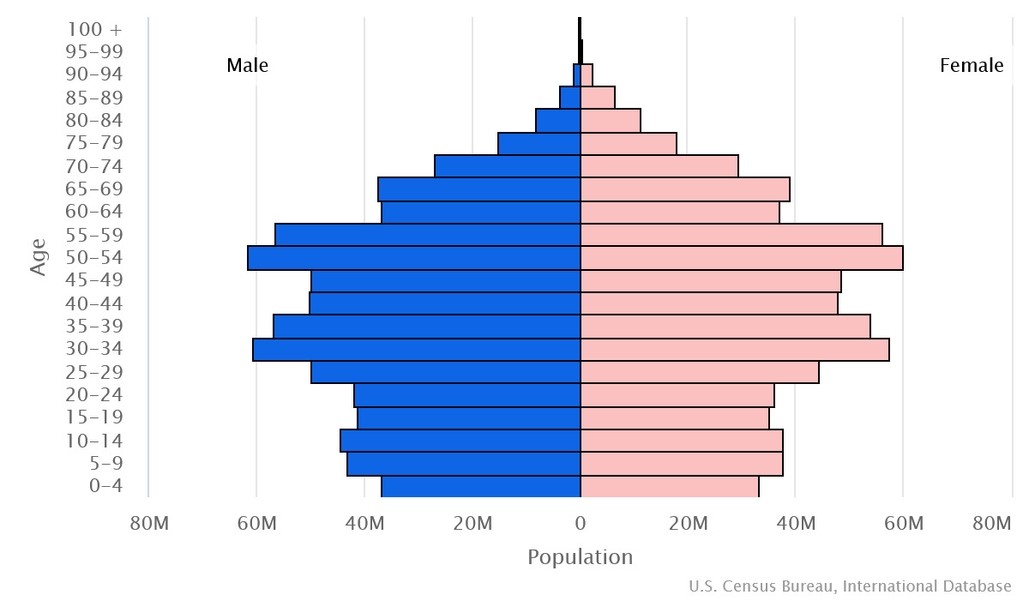
The country’s population surpassed China’s last year. More than half of Indians are under 25.

A couple of graphs from the CIA World Factbook put the two nation’s population structures in sharp relief, and at this stage of the two nations’ economic development, those structures are their future.

This is the structure of India’s population (scroll down a skosh):

This is the structure of the PRC’s population (again, scroll a tad):

India’s population of new workers is growing, so the nation’s economic capacity is capable of growing. The PRC’s population of new workers is shrinking. Not only is the PRC incapable of growing very much, economically, it’s becoming and will continue to become increasingly difficult to support its old folks, even as that portion of the nation’s population continues to grow.

Bank Capital Requirements

The Federal Reserve is looking hard at increasing the amount of capital that banks must hold in the Fed’s effort to boost bank liquidity, or their ability to handle sharply increased withdrawal rates.

There is pushback against this proposal, including objections that it might make it harder for banks to lend to folks on the lower economic tiers, even that it might make American banks less competitive than foreign competitors. That last often (not always) is just political Newspeak for “be more like Europe.”

However, the problem can be preempted—or at least pushed a considerable way down the road, allowing for more thought—by doing something different that IMNSHO is a better move, anyway.

Rather than increasing capital requirements, require all banks to mark to market (semiannually? quarterly?) all of the debt instruments the banks hold in satisfaction of existing capital requirements.

Then leave that requirement in place for some period of time (5 years, say) in order to get a serious look at how well, or poorly, that requirement supports bank liquidity during economic downturns.

You’ve Formed Your Opinion on EVs. Now Let Me Change It.

That’s the headline on Dan Neil’s Wall Street Journal paeon to the battery-powered car. In his piece, he acknowledges the past and current shortcomings of Electric Vehicles, but he lays those off to car company marketing rather than to actual performance.

My mind isn’t as made up as Neil’s headline implies; nevertheless, challenge accepted.

I drove a Ford Fusion Hybrid for a number of years, and it was a fine car. However, the battery price premium was enormous, and the reduction in trunk capacity to make room for the battery was just as enormous.

I replaced it with an ICE Fusion, and that car was just as peppy and responsive as the Hybrid (peppiness and responsiveness was one of Neil’s touts regarding battery-powered cars), and I had decent trunk capacity.

I’d get a Hybrid again, were the battery premium actually to come down decently.

I won’t buy a purely battery-powered car until a number of criteria are met:

  • the battery has to be chargeable to a 400-mile range in the same minimal time that I can fill my ICE gasoline tank to a 400-mile range
  • the battery premium must come down. The 14% reduction Neil claims is from a hugely high price
  • the battery’s lifetime must be at least as many years as I drive my cars, and as many miles
  • the battery must stop suffering so significantly from cold temperatures. The battery in my ICE that powers my car’s starter motor also suffers, but it only needs to crank the engine. If needs be, I can get a jump start. The EV’s battery is its motive source, and that motor can’t be jump-started; its power source must be “refueled”
  • the battery must be disposable/recyclable with far less environmental damage done or risk of damage done than is the case today

EV prices are coming down, as Neil claims? Show that after EV subsidies are stopped, and EV buyers pay actual market prices. No one should have to pay tax money because someone else bought an EV.