The Left’s War on the Poor

It’s exemplified by California’s egg-laying chicken cage requirement. In 2008, California voters

required the state’s poultry farmers to house their hens in significantly larger cages. The state legislature realized this would put home-state farmers at a disadvantage, so in 2010 it compounded the problem by requiring that eggs imported from other states come from farms meeting the same cage standards, effective Jan 1, 2015.

That’s an expensive requirement: $40 per egg layer.

The number of egg-layers in California has fallen by nearly a quarter in the last two years, and quite a number of egg producers outside California have declined to meet the California standard and so to stop selling their eggs in that state.

As a result,

the average price for a dozen jumbo eggs is $3.16, up from $1.18 a dozen a year ago, and in some parts of the state it’s more than $5.

Who’s paying those outlandish egg prices? Among others, it’s the financially poor citizens of California.

What’s humane, exactly, about this cavalier inflation of the cost of food for those poor? Does anyone seriously think the highly intelligent folks behind this cage law—especially the state legislators who thought it would be a good idea to compound the problem—didn’t know this sort of outcome would result?

An Implication of the Greek Elections

Greece is nearly bankrupt, it has defaulted on one round of national debt since the global Panic of 2008, it has received two bailouts from the rest of the European Union and from the IMF in partnership with various EU institutions (one of which included that default), and it’s demanding another round of…debt relief…against which the current troika of the IMF, the European Central Bank, and the European Commission are refusing to certify that Greece is ready and able to handle another loan. This current crisis reached its fullness last fall, and the then Greek government collapsed, necessitating Sunday’s snap elections.

Against that backdrop, the Syriza party won those snap elections resoundingly, coming from being a back bench party of growing influence to winning 149 seats in the 300 seat Greek Parliament—two short of an outright majority and the ability to govern alone. Syriza has been, throughout the post-Panic crisis, very much opposed to any sort of bailout other than outright debt forgiveness (the polite word for default), while the EU has been just as opposed to any alteration of the terms beyond stretching out payments in return for the Greeks submitting to ever higher taxes and ever reduced government spending. The result of acquiescence to the prior rounds of raising taxes and cutting spending has been an economy that’s varied between stagnation and collapse—driven especially by the combination of cutting spending (which, alone, would have been beneficial) and raising taxes. Hence the appeal of Syriza.

Lacking two seats, though, the party had to form a coalition government; if no one would join, the government would collapse again, and new elections would be necessary. The party thought most likely to join was To Potami with its 16 seats, a generally centrist party, but one also generally opposed to yet more taxing and cutting. Instead, Syriza formed the needed coalition with the Independent Greeks Party, which won 13 seats Sunday.

Either coalition party would have given Syriza sufficient cushion over the 151 seats needed to govern, so why the Independent Greeks? Syriza is a far-left party of Marxists, and the Independent Greeks are far-right party formed two years ago explicitly to oppose the EU’s austerity impositions on Greece. They’re also opposed to immigration and…multiculturism…and they want Greece out of the EU altogether. To Potami, not so much on any of those accounts, and although they oppose further “austerity,” they’re not hard over on it; they’re more malleable.

Now, what happens next? The new Greek Prime Minister, who should be Syriza’s Alexis Tsipras, has said he will force renegotiation of Greece’s existing “bailouts,” worth €240 billion ($268 billion), “or else.”

The EU is just as adamant about not renegotiating. German Chancellor Angela Merkel:

We believe Greece has accepted terms that are not off the table after the election day[.]

President of the Eurogroup [of eurozone finance ministers] of the Board of Governors of the European Stability Mechanism [of financial assistance programs for eurozone members in “financial difficulty”] Jeroen Dijsselbloem on the prospect for “leniency” for Greece regarding its debt:

I don’t think there is a lot of support for that in the eurozone[.]

The most likely (the plurality of a plethora of options) “or else” from this potential impasse would be Greece’s departure from the eurozone—to use its own currency—and possibly from the EU altogether. With the Independent Greeks joining Tsipiras’ coalition, he got the political backbone to hold out for exactly that as the only alternative to debt forgiveness.

A Greek departure has been projected to be a disaster for the eurozone, the euro, and the EU. It certainly would shake them, but even in the extremity of those three falling apart, it would hardly be a disaster. And it would be, in the longer run, good for Greece, too.

Foolish

Amazon will start collecting sales tax from Illinois consumers next month to comply with a new state law, the company said.

The Seattle-based e-commerce giant will be required to collect the 6.25% tax starting Feb. 1….

And

State retailers supported the legislation to level the playing field for brick-and-mortar businesses.

Foolish. The better way to level the playing field, the more economically efficient way, the way that actually would raise revenue for the verge-of-bankrupt Illinois government would have been to lower the sales tax charged to Illinois brick-and-mortar retailers. After all,

The Illinois Department of Revenue estimated uncollected taxes in 2013 from online purchases from Amazon and other retailers at $212 million.

Think about the effect on Illinois’ brokeness from withdrawing an additional $212 million from its economy.

Illinois collected $12.77 billion in sales tax in 2013 from a sales tax rate of 6.25%. Think about the boost to Illinois’ economy from a drop in the state’s rate of just one per centage point to 5.25%, which would leave a skosh over $2 billion in the hands of Illinois’ citizens.

But this is Illinois.

Another Bit on Taxes

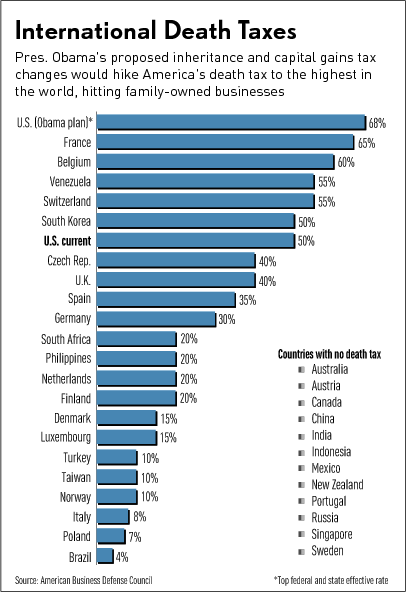
This is a tax increase that President Barack Obama chose not to mention in his State of the Union address while he was demanding to increase taxes on the “rich” in order to give that money to his “middle” class. Perhaps he chose to omit mention because this is a tax increase on that same “middle” class. And perhaps because it contradicts the story he’s spinning on wanting to make junior college “free.”

Recall 529 Plans, which facilitate parents’ and other family members’ (even family friends’) saving for the future college expenses of those parents’ children. Recall further that withdrawals from those 529s, when made pursuant to college expenses, are (so far) tax free. Obama’s hot tax idea is to change that, instead taxing the earnings on 529 savings when the money is withdrawn for college expenses.

This just illustrates the utter incoherence in Progressives’ taxing policies. And it’s another demonstration of the foolishness of using the tax code for social engineering—or for any other tampering with our economy.

Taxes

Treasury Secretary Jacob Lew had a thought.

I don’t think that there’s any advantage in pretending that there aren’t big disagreements on the individual tax side. We had a national debate just two years ago about the top rate. We’re not looking at the kind of negotiation to go back to lower the top rate.

Never mind that after that debate and just a few months ago, Americans voted overwhelmingly to reject President Barack Obama’s tax policy—which he’d placed on the ballot along with every single one of his other policies (every single one of which were similarly rejected in that same election).

This Progressive, along with Obama, Knows Better and recognizes no obligation to listen to his employers.

It’s going to be a long two years with President No and his Party of Naysayers still in the way of economic reform and long term economic recovery and prosperity.