An Embassy Move

The Trump administration has taken steps to speed up the move of the US embassy to Israel from Tel Aviv to Jerusalem.  Instead of building new, the administration

has decided to modify an existing property to accommodate the new mission that will open next year, US officials said.

Good.  This illustrates that President Donald Trump is not just engaging in Obamatalk about any move, he’s actually suiting action to his words.

The execution of the move also is consistent with past behavior.  The original plan was that brand, spanking new building that would have cost a billion dollars and years of time to get done.  Instead, by retrofitting an existing consular building, a more than adequate (if not ridden with lots of bells and whistles and froo-froo) building can be had for considerably less (the retrofit still won’t be cheap: think security and cyber protections) and be open for business next year.

A Bad Deal

And all for the sake of a personal legacy, apparently.

Republic of Korea President Moon Jae-in has cut an Olympic-sized deal with northern Korea concerning the latter’s participation in next month’s Winter Olympics.  According to the deal,

South Korean athletes and performers [will go] north of the demilitarized zone for training at a North Korean ski resort and a cultural event at a scenic mountain resort.

Further,

[T]he two Koreas will walk into the opening ceremony of next month’s Winter Games in Pyeongchang, South Korea, under one flag—the unification flag that depicts all of Korea. The two countries’ women’s ice hockey teams will unite to form a joint Korean squad.

It’ll be interesting to see how many ROK athletes and performers will be willing to go north and the quality of those who do.  It’ll also be interesting to see what the single flag looks like; here’s what the “reunification” flag looked like at the 2006 Winter Olympics:

It’ll be even more interesting to see how many of the RoK women’s hockey team actually show up.  There’s considerable disgruntlement among the team, Olympic athletes generally, and athletic sphere leadership over Moon’s agreement here, both over the agreement and over the RoK players who will be cut or denied ice time to make room for the north’s players.

And: the agreement seems not to have been done with athletes’ input or even warning that it was coming.  Moon certainly is setting his legacy.

Nuclear Weapons Proliferation

President Donald Trump has moved to fix or withdraw from ex-President Barack Obama’s (D) Executive Agreement with Iran, cosigned by the leaders of a number of European nations, covering Iran’s nuclear weapons program.

Folks can argue that this step has taken too long (and the terms of Obama’s EA have not been fixed, yet, nor have we canceled it; the deadline for that is next May), and I’m among the impatient.  However, the delay isn’t all bad (so far), since discussions of the Agreement, both public and behind the scenes (I assume), over the course of this delay have made the problems with it plainly evident, and the other parties to the deal no longer have excuses—they’ve have plenty of time to make their positions plain.

And the European parties are doing so.

European leaders have pushed back against major revisions. That, they fear, could give Tehran an excuse to walk away from the deal entirely, accelerating Iran’s path to a nuclear weapon.

This is naïve.  Accelerated or only moderately accelerated, Iran will get nuclear weapons in the current circumstance.  That would be the true disaster, since Iran has sworn to destroy Israel, and Iran will happily sell (or give) nuclear weapons to its client terrorist network entities for the latter’s use in Europe, the US, and elsewhere around the world.

Northern Korea and Talks

Jonathan Cheng had a piece in the Wall Street Journal that talked about differences in policy held by RoK President Moon Jae-in and US President Donald Trump, especially concerning northern Korea.  He seemed surprised that friends or allies could disagree with each other rather than one simply being a satrap of the other.

Withal, though, I want to comment on one remark he had at the end of his piece.

[Moon suggested that] the end goal of international pressure and sanctions is to “find a way for North Korea to live together in peace with the international community”—a comment that appears at odds with the US goal of denuclearization.

Cheng is wrong; there is no contradiction. If northern Korea truly is interested in “living together in peace and harmony with the international community,” it has no need of nuclear weapons. No one is interested in attacking northern Korea, except in self defense, perhaps preemptively.

Northern Korea doesn’t have very much that anyone else wants, and what it does have is more easily and more cheaply obtainable through free trade than through conquest. Baby Kim knows this.

Leadership

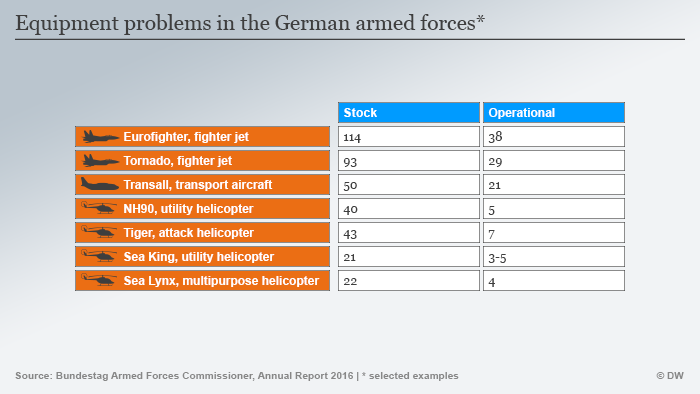
Maybe German Foreign Minister Sigmar Gabriel is figuring a couple of things out.  Here are a couple of his remarks in an interview with Spiegel Online:

In the past, we could rely on the French, the British and, especially, the Americans, to assert our interests in the world. We have always criticized the US for being the global police, and it was often appropriate to do so. But we are now seeing what happens when the US pulls back. There is no such thing as a vacuum in international politics. If the US leaves the room, other powers immediately walk in. In Syria, it’s Russia and Iran. In trade policy, it’s China. These examples show that, ultimately, we are no longer achieving…the dissemination of our European values nor the advancement of our interests.

And

[Should Europe be feared?] No, not feared. On the contrary. Countries that work with us should feel safer than they would if they worked with non-democratic regimes. Why isn’t Europe building infrastructure in Africa instead of leaving it to the Chinese? Why haven’t we succeeded in promoting the economic development of our neighbors in the Balkans, instead conceding these countries to growing Russian influence? In an uncomfortable world, we Europeans can no longer sit back and wait for the USA.

Maybe the US being the world’s policeman wasn’t—isn’t—such a bad thing, after all.  For all that, maybe Europe—if it can reach actual and durable consensus—and in particular Germany, stepping up more and taking on more of their own global security responsibilities isn’t such a bad thing, either.