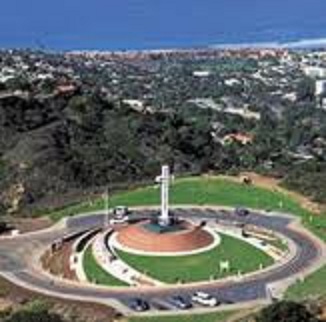
Memorial Day Celebrations

I first posted this in 2012. It bears repeating.

Enjoy this holiday. Take the time to kick back, relax from the hard work you’ve been doing, and just goof off for a bit.

While you’re doing that, though, do something else, also. Invite that veteran in your neighborhood, who came back from his service wounded or maimed, and his or her family, to your celebration. Invite the family in your neighborhood whose veteran was killed in his or her service to your celebration. They need the break and the relaxation and the support, also. And they’ve earned your respect and remembrance.MtSoledadMemorialImage_big

MojaveCrossTo which I add this, excerpted from Alex Horton’s remarks on the significance of the day to him and his:

I hope civilians find more solace in Memorial Day than I do. Many seem to forget why it exists in the first place, and spend the time looking for good sales or drinking beers on the back porch. It’s a long weekend, not a period of personal reflection. At the same time, many incorrectly thank Vets or active duty folks for their service. While appreciated, it’s misdirected. That’s what Veterans Day is for. Instead, they should take some time and remember the spirit of the country and the dedication of those men and women who chose to pick up arms. They never came home to be thanked, and only their memory remains.


h/t Spirit of Enterprise

NSA, Bulk Collection, and Security

For now, there is no bill extending in any form the NSA’s ability to bulk collect metadata about our telephone calls. The House-passed bill that would have kept those data in phone company possession and NSA-searchable under explicit court order failed in the Senate Friday, as did any effort to extend the existing capability, for any duration. At this point, the House and Senate are in Memorial Day recess and won’t return until the 31st. With the collection authority expiring on 1 June, that leaves the House and Senate only a few hours to figure something out or leave the thing expired.

Senator and Presidential Candidate Rand Paul (R, KY) said in the aftermath,

We should never give up our rights for a false sense of security. This is only the beginning—the first step of many. I will continue to do all I can until this illegal government spying program is put to an end, once and for all.

For all his braggadocio, Paul is right on the essence of this.

There is, and there always will be, creep; there is always expansion of government power, if not authority, no matter the good intentions for the original expansion. The best place to draw the line against further creep, the only effective place to draw the line, is at zero. The Constitution has transferred to government all the fraction of our liberty necessary; there need be no further transfer.

We can have security by giving up (some more) liberty? No. There is no security at all without liberty. The House-passed bill would have been a suitable intermediate step in winding down the bulk collection, and it should have been passed: a sudden disruption of the NSA’s necessary intelligence gathering can be dangerous. At best, though, it should have been taken as only that, and additional measures taken to complete the winding down.

Update: An earlier version of this post foolishly referred to Senator Paul as “Ron.”  That error has been corrected.

A Foolish Plan

The European Union may accept up to 20,000 refugees a year and set up an automatic redistribution program for migrants overcrowding southern European states, under plans currently being developed in Brussels.

This doesn’t address the problem at all; it just encourages the current freshet to burgeon into a raging torrent.

True enough, as one anonymous EU official said,

We have to start somewhere. Agreeing on refugees outside the EU may be easier, because they are the most in need. Then, we may move on to relocation within the EU.

Indeed, the EU must start somewhere.

How about starting at the source of the refugee flow: here, the “unrest” in Syria and in northern Africa? Resolving the situations there on terms that leave the locals feeling safer and with some chance to prosper would take a lot of work, a lot of time, and a lot of resources in men and money, but it would yield far more permanent and moral results.

But there’s that work part. These EU persons would rather just take the easy way out, a way that gives short term feel-good and prompt personal political benefit. They don’t actually care a farthing about the refugees in their own right.

“We Are Not Citizens of Ukraine”

That’s what Alexander Zakharchenko, a leader of the rebels in Donetsk Oblast of Ukraine, is quoted as saying in Christian Neef’s article of that name in Spiegel Online International.

Fair enough. Then you and your rebels should leave Ukraine and move to Russia, which you think is a better nation than Ukraine, anyway. After all, you’re in Ukraine illegally, now.

Protect People, Not Borders?

That’s what Maximilian Popp, over at Spiegel Online International, thinks. The caption of the lead image is this:

The mass deaths of refugees like those seen this weekend on the European Union’s external borders is not a consequence of politicians looking away. We are in fact causing the problem with our Fortress Europe policies.

The capsizing of a refugee boat with the loss of the lives of hundreds was not caused by European policies, whether national or European. Neither was the murder of seven Christians on another refugee boat by their Muslim fellow refugees. Those were caused by a boat captain’s error and by Muslim murderers.

Sure, to some extent, incidents like those beg the question. But Popp is presupposing the wrong problem.

The mass deaths of refugees at Europe’s external borders are no accidents—they are the direct result of European Union policies.

Why are these refugees flooding the Mediterranean, the land bridges into Europe, or flooding the US’ southern border? They think there’s a much better life to be had in Europe and in the US. It’s as simple as that. EU policies have nothing to do with that, except to the extent that EU policies create an economic, political, and social environment that makes it possible for a man to realize his and his family’s full potential, instead of being held back by the barbarism of the environments these folks are fleeing.


A nation must first exist, and then it must first protect its own people, must first secure its own people’s prosperity. It must protect its own borders. Only when a nation has secured itself can it have any means of helping refugees. If borders aren’t protected, and protected first, nations won’t exist, and so there will be no entity extant with the capacity to help refugees. Indeed, rather tautologically, there will be no refugees, only people roaming and searching. And no place for anyone to search for other than “not here.”

No nation has an obligation to let anyone in who demands it, or even who simply comes across its border, no more than does a homeowner have an obligation to allow anyone in through the door, or window, who wants it or succeeds in the penetration. Allowing such a thing would directly destroy the house, and the nation.

A nation, and the men who are that nation, have a Judeo-Christian obligation to help those less fortunate—refugees here—certainly. But that help is best done, not by encouraging the flood of refugees, but by helping them at their source: correcting the barbarism in their originating environment, helping the people of those nations develop—and implement—the policies that will foster an economic, political, and social environment that will allow them to prosper where they are.

Until that’s done, the flood of refugees will only continue, the prosperity of their target nations will be drained away, and there will be no means of helping them anywhere. After that’s done, even after a good start has been made, there still will be a flow of refugees, but it will a trickle easily managed by the receiving nations. And that trickle will have far fewer incidents of boat captain error or of refugee on refugee murder.